A Veterinarian’s View: the results of shooting wildlife
By Dr. Lauren Michaels, Director of Animal Care
This fall, a coyote (Canis Latrans; case # 26-5025) was brought through California Wildlife Center’s (CWC) clinic doors with a gunshot wound to the neck, confirmed by exam and radiographs (x-rays). He had also been hit by a vehicle, and together these injuries resulted in traumatic brain injury. The gunshot wound likely led to the second injury, putting a motorist at risk as well. Despite weeks of intensive care, this animal’s case still had a grave prognosis.
Gunshot cases due to bullets, BBs, and pellets peak in fall and winter, but CWC has seen a rise in summer cases over the past couple of years. Like this coyote, many patients who are shot are not killed outright. Raptors (hawks, falcons, and owls) are the most common. Wing fractures leave them unable to fly or hunt, leading to starvation or sepsis (systemic infection). If an injured bird reaches a specialized rehabilitation center in time, they are likely to face at least six weeks of care, which may include wound care, surgery, diagnostic imaging, physical therapy, and flight conditioning. Even then, there is no guarantee that the injury is surgically repairable, as was the unfortunate case for Cooper’s Hawk (Astur Cooperii; case #26-5243) that could not be released.
Bullets or pellets may may contain lead, which poisons scavengers and predators who feed on the carcass of a shot animal.
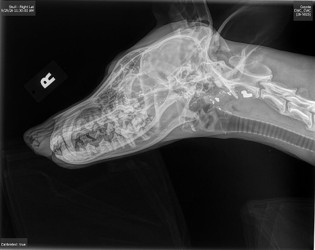
Coyote (case #26-5025) with bullet fragments in the neck
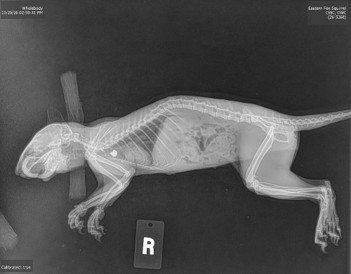
Pellet shot Eastern Fox Squirrel with left body wall injury
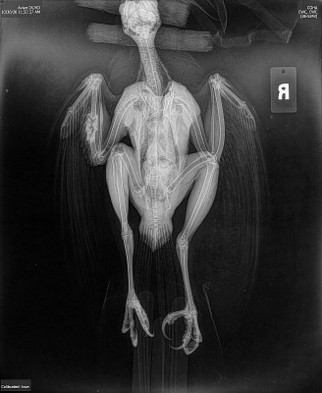
Pellet shot Cooper’s Hawk (case #26-5243) with left ulnar wing fracture
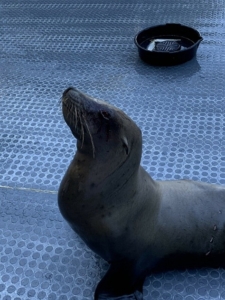
California Sea Lion (case #25-321) Gunshot wound to the left eye
In our clinic’s experience and outside of legal, regulated hunting, most wildlife is shot out of fear, because the animal is seen as a pest, or for “sport.” Shooting animals for any of these reasons is never justified. Hawks are protected by the federal Migratory Bird Treaty Act, and marine mammals by the Marine Mammal Protection Act.
Most wildlife poses little danger, and better solutions exist. Start by removing food sources and trash and securing small livestock. CWC also offers wildlife coexistence talks with practical tips. If you find an injured wild animal, contact your local licensed wildlife rehabilitator. If you suspect the animal was shot, you may report it to the CalTIP line at 1-888-334-2258.
The patients whose images you see in this article were not injured by accident. These injuries resulted from a choice, one every one of us can refuse to make. Each call to a rehabilitator gives an animal a second chance. Red-shouldered hawk (Buteo Lineatus; case #26-3183) sustained a left ulnar fracture of the wing and was successfully released back to the wild. A subadult California sea lion (Zalophus Californianus; case #25-321) who was shot in the left eye survived surgery, proved that they could still hunt and find fish, and was released back into the ocean. Share your local wildlife rehabilitation center’s information with your neighbors and help build a community where people and wildlife coexist in a healthier way.