Education Corner: Autumnal Native Plants
By Cambria Wells, Education & Outreach Manager
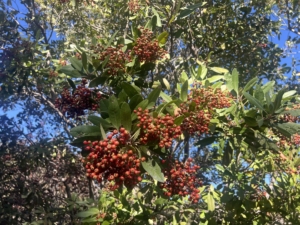
Toyon
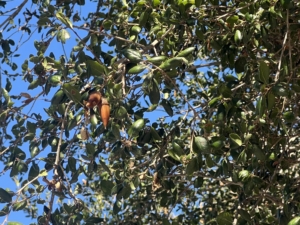
Coastal Live Oak
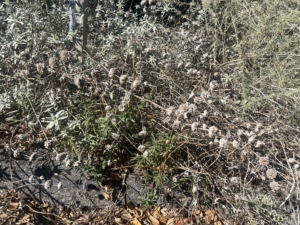
Purple Sage
There’s a common joke that Los Angeles has no seasons. It’s not an unfair perspective; our mild climate can mean that in urban and suburban environments, signs of the season are difficult to recognize. We often plant our gardens and outdoors spaces with evergreen ornamental plants from other areas, but when we turn to the native plants of Southern California, they tell a different story. CWC’s location in the Santa Monica Mountains is home to native plants whose natural reactions to the changing temperatures and shorter days show us clearly that Autumn is in full swing.
Directly behind CWC’s Intensive Care Unit building is an especially large and successful Toyon (Heteromeles Arbutifolia). These shrubs from the rose family produce clusters of ruby-red berries in winter, providing a vital food source for migratory birds. Our team enjoys watching crowds of Hermit Thrushes take up residence in our Toyon over the winter every year.
In front of CWC’s buildings, in our garden beds, an assortment of plants that have brought us colorful flowers and lush foliage all summer are now falling into dormancy. Particularly dramatic is the Purple Sage (Salvia Leucophylla), which leaves “skeletons” of its flowers behind as seed heads. CWC leaves seed heads on the plants in our garden beds when possible, to provide natural food sources for songbirds.
Always richly green, but never taken for granted, the Coast Live Oaks (Quercus Agrifolia) which shelter the land CWC sits on, are showing the season in their own way. Acorns sit heavy among their leaves at this time of year, and litter the ground, feeding woodpeckers, jays, deer, squirrels, insects and more. It takes an oak tree 20-30 years to become mature and produce acorns; Coast Live Oaks often take much longer, with their average lifespan typically measured in centuries.
If you start to long for a place that really “feels like fall” this year, look no further than your nearest trailhead. To bring that feeling home for years to come, and help wildlife, plant native California wildflowers, shrubs and trees in your yard.