Keeping Our Distance to Keep Them Safe
By Kristen Kanatzar, Hospital Manager
CWC admits over 4,000 patients a year, and whether our patients are with us for days or months, we always make sure they are receiving the best care possible. While some patients can be assessed through routine visual checks, others are more sensitive and benefit from remote monitoring. Our advanced camera system allows our care team to closely observe these patients while minimizing unnecessary stress and handling.
We utilize trail cameras in our bird of prey enclosures after the patients have recovered from wing or leg fractures to monitor things such as ambulation, flight, perching ability, appetite, and overall well-being. We also set up trail cameras on our patients who have been hit by cars and came in with either soft tissue damage or fractures to see how they walk around and if there are any other points of injury that we need to address.
Cameras are also located in the enclosures of our most sensitive species. Fawns and coyote pups stay in our care for many months until they grow to be releasable young adults. Because of the length of time they are in care, we must find a careful balance between monitoring their growth and well-being while limiting our interaction. This allows them to continue developing herd and pack dynamics, instincts and behaviors they need to survive in the wild.
The most recent addition to our camera lineup is a nanny camera that we put in our smaller indoor enclosures that help us monitor our patients when they are in their most critical condition. The camera provides us with a live feed, which allows us to adjust enclosure or care plans in real time and stabilize patients as quickly as possible. We utilize these when monitoring the appetite of emaciated raptors in care; we can see in real time their ability and willingness to eat and process food.
Many animals act differently when people are observing them. Utilizing a camera system allows us to assess our patients without adding the undo stress of human interaction, which gives us a much better picture of the patient’s overall health, well-being, and releasability.
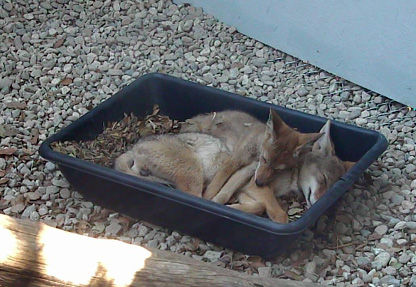
Coyote pups viewed through camera
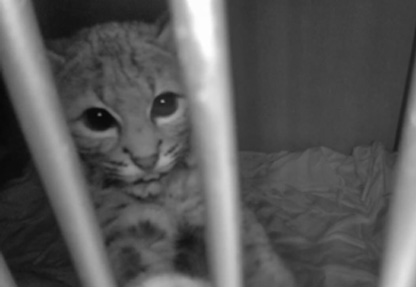
Bobcat in enclosure taken via enclosure camera
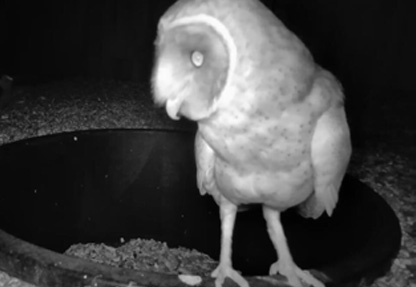
Barn owl perched on feed bin, taken via camera
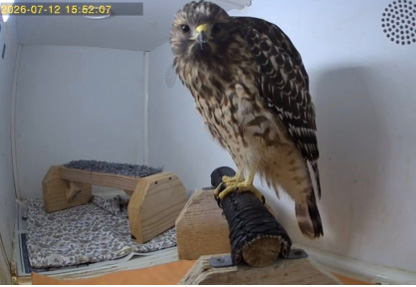
Red-Shouldered Hawk, taken during video monitoring.