
Fragile Beginnings, Wild Futures
Dr. Lauren Michaels, Director of Animal Care
As one of the few facilities in Southern California equipped to provide long-term rehabilitation for mule deer (Odocoileus hemionus) fawns, California Wildlife Center prepares each spring and summer for the arrival of these fragile patients. This year, our veterinary team has cared for nine fawns among nearly 4,400 other wildlife patients. Although they may appear resilient in the wild, young deer are some of the most medically delicate animals we treat.
Most of the fawns admitted this season arrived after becoming orphaned during the first 2–4 weeks of their life. Without their mothers during this critical stage of development, they can quickly develop life-threatening complications such as dehydration, dangerously low blood sugar, anemia, and disruption of the healthy bacteria that their growing digestive systems depend on. Early intervention can make all the difference. For example, one fawn arrived with critically low blood sugar and severe dehydration detected on their intake exam and bloodwork. Our veterinary team immediately placed an intravenous catheter to deliver fluids and glucose around the clock, carefully monitoring the patient until they were stable enough to continue recovering outside of our intensive care unit.
Not every patient arrives simply orphaned, however. This season, most of our fawns presented with traumatic injuries, including wounds or head trauma from vehicle strikes and complications associated with capture myopathy – a potentially fatal condition caused by extreme fear, stress, or exertion. In May, one young fawn was admitted with severe wounds to the lower legs and hooves, making treatment especially challenging. While frequent bandage changes and wound care were necessary, each procedure had to be carefully managed to avoid adding unnecessary stress. Radiographs and bloodwork performed under sedation confirmed there were no fractures or systemic infections, and after nearly two weeks of intensive treatment, the wounds began healing well enough for us to reduce handling and allow the fawn to recover with their newfound herd at CWC.
Treating fawns involves more than just medicine, however. One of our greatest challenges with this species is preventing habituation to people during this early stage of life. Every interaction we make with these patients must balance providing lifesaving care while preserving the animal’s natural fear of humans – an essential trait for survival after release. Our specially trained staff use techniques that minimize stress and human exposure whenever possible, giving each fawn the best chance of returning successfully to the wild.
Watching these vulnerable patients grow stronger and more independent each day is one of the most rewarding parts of wildlife medicine and rehabilitation. Thanks to the dedication of our rehabilitation staff, volunteers, veterinary team, and our community, this year’s fawns are on track for release this fall, when they will be old enough to forage independently and return to their rightful place in the wild.
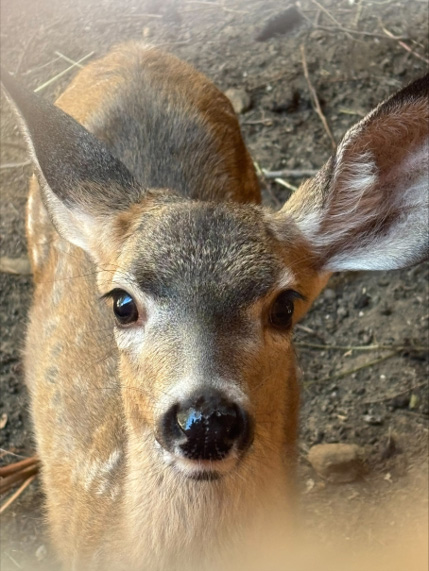
Mule Deer Fawn currently in care
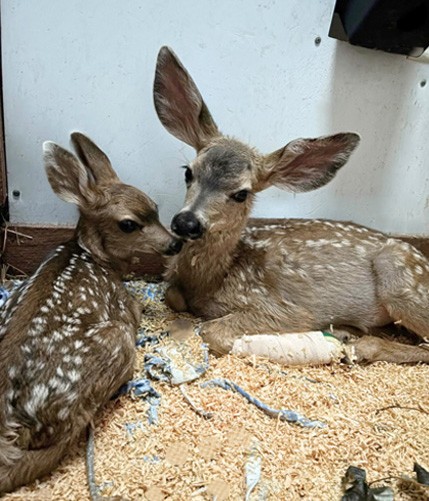
Young fawn admitted with severe leg wounds