
Wildfires and Wildlife
By Kristen Kanatzar, Hospital Manager
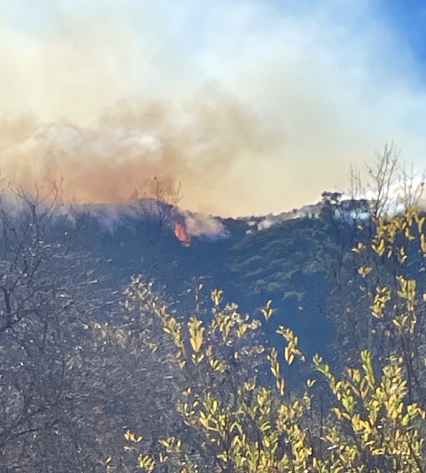
Franklin Fire burns near CWC
Living in Southern California, we are all accustomed to the year-round fire season and the impact it can have on our lives. When a fire is imminent, humans are often preoccupied with our own need for survival; we often forget about how natural disasters like wildfires impact the surrounding wildlife.
Wildlife is greatly impacted by wildfires due to a number of reasons. The immediate reason is the need to escape. When animals are trying to escape a fire, their likelihood of coming into contact with humans is significantly greater. The risk for window strikes and car collisions increases as animals descend from hillsides and wilderness into more populated urban areas. This movement can put already terrified animals into even more dangerous situations.
Animals who are either too young, already injured, or ill have a more challenging time getting away from a fire. This increases their risk of sustaining injuries. Because of an existing condition, animals may not be able to run or fly away from a fire, leading them to quickly find a hiding place. Sometimes these hiding places are safe and other times they are not. When a hiding place is unsafe, it can cause an animal to suffer from severe burns on their feet, legs, wings, and bodies. Unfortunately, most animals do not survive when they experience injuries like this.
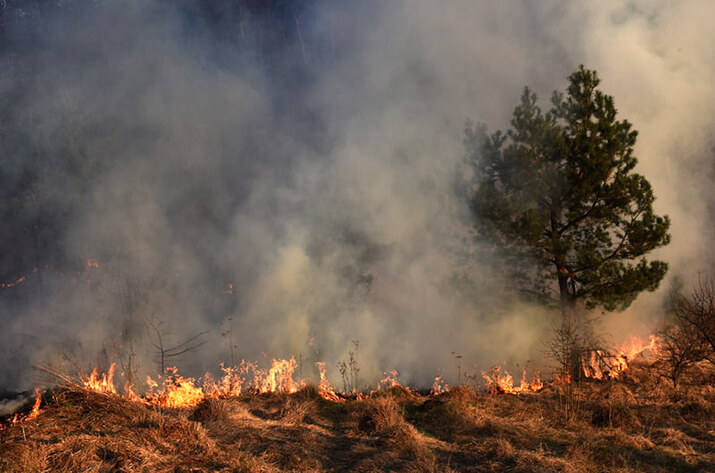
LA County wildfire
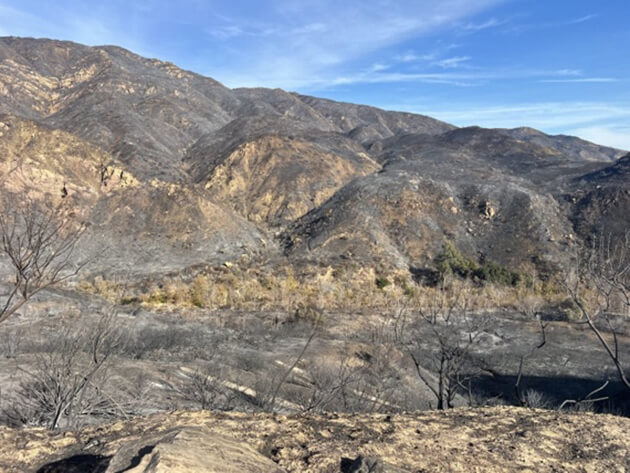
Burn scar from fire in the Santa Monica Mountains
For those who are able to escape a fire, there are still lasting impacts. Many animals suffer from smoke inhalation as they escape, either running through or flying over the burn areas. Some birds also experience singed wings as they fly over the extreme heat rising from the fire. These types of injuries to both the animal’s body and respiratory tract can impact their health for months following the fire. Even wildlife who are lucky enough to escape without any serious injuries feel the effects of wildfires. The amount of habitat lost due to fires can be remarkable. Animals can become displaced and must relocate to a new territory. This relocation puts a strain on already limited resources and increases instances of human-wildlife interactions.
The effects of wildfires can be felt in our natural environments as well as our communities for years to come. The impacts are massive and the only remedy to heal the communities lost and the habitats destroyed is time.