
The Northern Elephant Seal: “Orange”
By Alexis Sierra RVTg, Stranding Coordinator
Northern Elephant Seals have a difficult start in life. Typically born late December through early February, Northern Elephant Seal pups nurse and remain with their mom for just over four weeks. The weaning is abrupt, after which they remain on the beach for a few more weeks surviving off their thick layer of baby fat. Then, they make their way out to the ocean, relying primarily on instinct. Spring is the busy season for rescuing weanling Northern Elephant Seal pups in Malibu. The seal pups haul out and strand on the beach for a number of reasons – including starvation, illness, ingested toxins, parasites, predator trauma, and human interaction.
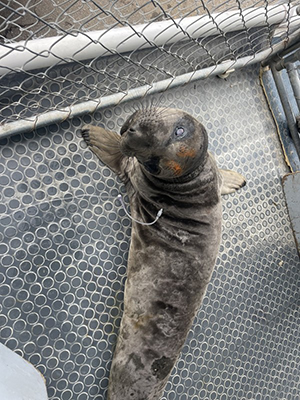
Orange during the intake process.
One of the special patients rescued this past season was case #24-046, nicknamed “Orange,” for the color of the nontoxic grease marker applied as identification. This young male elephant seal pup was rescued from Westward Beach on March 24, 2024, due to severe dehydration, emaciation, and an injury to the right eye. During the initial exam, staff noted that the eye had a cloudy and bloodshot appearance. He was prescribed antibiotics and given a sterile saline flush twice a day to combat the infection. One month into care, the right eye infection was stagnant.
Two good eyes are ideal, however elephant seals are deep divers using their vibrissae, or whiskers, to aid in foraging for food, which enables them to compensate for vision deficits. Meaning, Orange was still on track for release despite a non-visual right eye. However, his challenges did not stop there. The rehab team noted that during his journey to learn to eat fish, he often left large amounts of fish, ate at a slower pace compared to other pups in care, and appeared to experience trouble swallowing. Concerned about discomfort caused by irritation or inflammation to the upper GI tract, anti-inflammatory medication was added to his treatment.
After a couple of weeks, Orange worked through his challenges swallowing whole fish, then quickly began to meet the milestones necessary for release. Now ready to work on underwater foraging, he eventually learned how to dive and compete with other pups, vital to an elephant seal pup’s development. After 113 days of care, Orange’s eye infection was fully healed, and his previous struggles with eating whole fish were overcome. He was successfully released back into the wild, weighing a healthy 157 lbs.
Entering March, the next generation of young Northern Elephant Seal pups are heading out on their own journey to survive. Some may need a little help along the way. It starts with you – noticing, caring, and reporting concerns to our rescue team (310) 924-7256. Thank you!
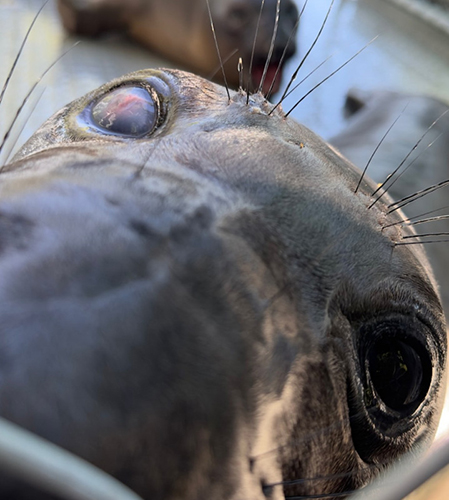
Staff noted that Orange’s eye had a cloudy and bloodshot appearance
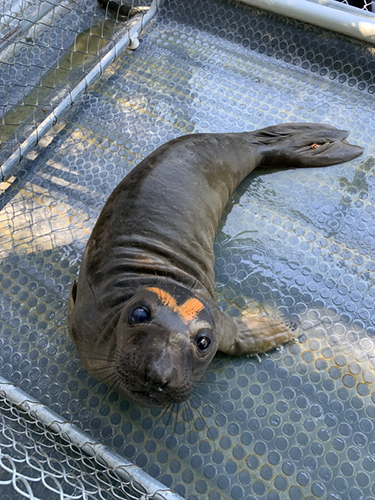
The orange identification mark is clearly visible on the patient’s head
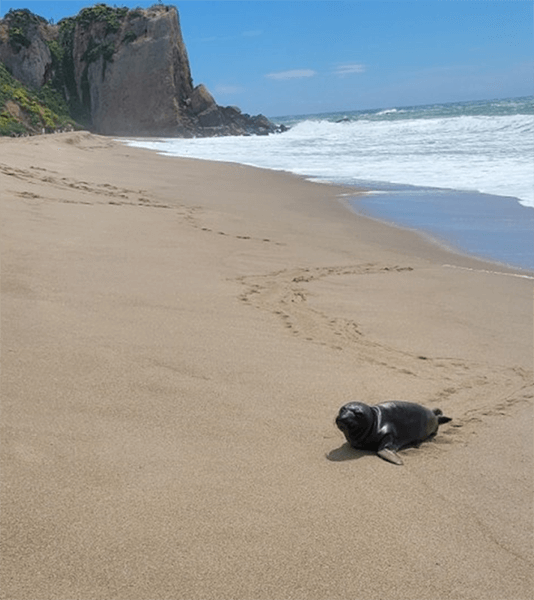
Orange’s release day