
Western Coachwhip
By Dr. Guthrum Purdin
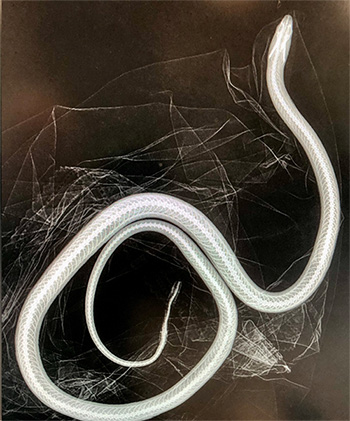
Radiograph of Western Coachwhip
In May 2024, a Western Coachwhip snake (Masticophis flagellum) was brought to our Intensive Care Unit by a concerned member of the community. In the over 25 years since its founding, the California Wildlife Center has only had four of this species arrive for care.
Ranging across much of the southern US and into Mexico, Coachwhips are named for their exceptionally long, thin bodies. Coloration varies widely; the patient is more cryptically colored than some other types. Coachwhips are also really fast, there is even folklore about them chasing after people! During rechecks of this Coachwhip, our staff have had to be especially careful of escape attempts. This type of snake is quick, able to fit through narrow spaces, and always ready for an opportunity to rocket off. Only certain caregivers are expert at effectively catching this one for treatments. Safety is also a concern, although non-venomous with delicate jaws, our coachwhip can be feisty and will bite if given the chance!
The finders reported they saw this snake being chewed on by a Virgina Opossum. This was surprising. It’s true that opossums are known to eat snakes (they’re even resistant to rattlesnake venom), but it’s unusual for one to catch a speedy Coachwhip. Either the opossum was a skilled hunter, or the snake had an underlying problem that slowed them down enough to almost become dinner. What we do know is the snake was in terrible condition upon arrival. There were bite wounds all over the body, some quite deep. The last two inches of tail were barely attached by a few threads of skin. Additionally, the Wildlife Technician conducting the initial exam had a sharp eye and spotted parasitic mites chewing on some of the body scales.
The snake’s wounds were disinfected, the reptile was soaked in a warm water bath, and medications were started for both the bite wounds and the parasites. When I first saw the patient, I removed the disarticulated tail tip, then bandaged it and tended to the other injuries. Treatment has been in progressive, ongoing stages for the past few months. The bites near the missing tail tip were severe and I eventually needed to amputate another three inches. This may seem like a lot, but fortunately this snake is so long and thin that it’s barely noticeable. Snakes periodically shed their skin—this patient has shed once while in the hospital. Due to the severity of the injuries, I needed to manually help the patient slough off the old scales. With the old skin gone, I could see additional tooth marks which were then more easily treated. The ectoparasitic mites were successfully eliminated.
Which brings us to today- reptiles heal slowly, but the Coachwhip patient is almost finished with treatment! The dressings to the wounds and the amount of medication have both been reduced. The Coachwhip will be kept a little longer for observation and if all goes well, the snake will be speeding off into the wild—hopefully staying well clear of any opossums!
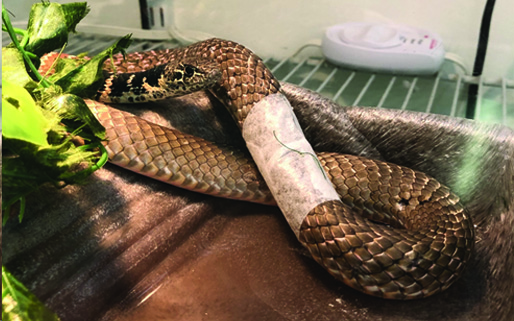
Western Coachwhip Snake in care at CWC