
• Link to Facebook
  • Link to X
  • Link to Youtube
  • Link to Instagram
  • Link to Mail
MEDICAL EMERGENCY? CALL: +1 310 458-WILD(9453)
DONATE
California Wildlife Center
  • Home
  • About Us
    • What We Do
    • Our Team
    • Education
  • Animal Resources
    • Medical Emergency
    • Co-Existing with Wildlife
    • FAQ
    • Animal Profiles
    • Gallery
  • Support Us
    • Ways to Support Us
      • Donate & Support Wildlife
      • Conservation Circle
      • Sponsor an Animal
      • Our Wish List
      • Other Ways to Give
  • Get Involved
    • Employment
    • Volunteer
      • Become a Volunteer
      • Internships
      • Externships
  • Events
  • News & Blog
    • In the News
    • Newsletters
    • Patient of the Week
    • Edison
    • From the Community
    • Videos
    • Gallery
    • Media Requests
  • Contact
  • Store
  • Click to open the search input field Click to open the search input field Search
  • Menu Menu

Everything You Ever Wanted to Know about Mourning Doves (but Maybe Never Thought to Ask)

August 14, 2018/in Birds

by Melissa Hartman, Administrative Assistant
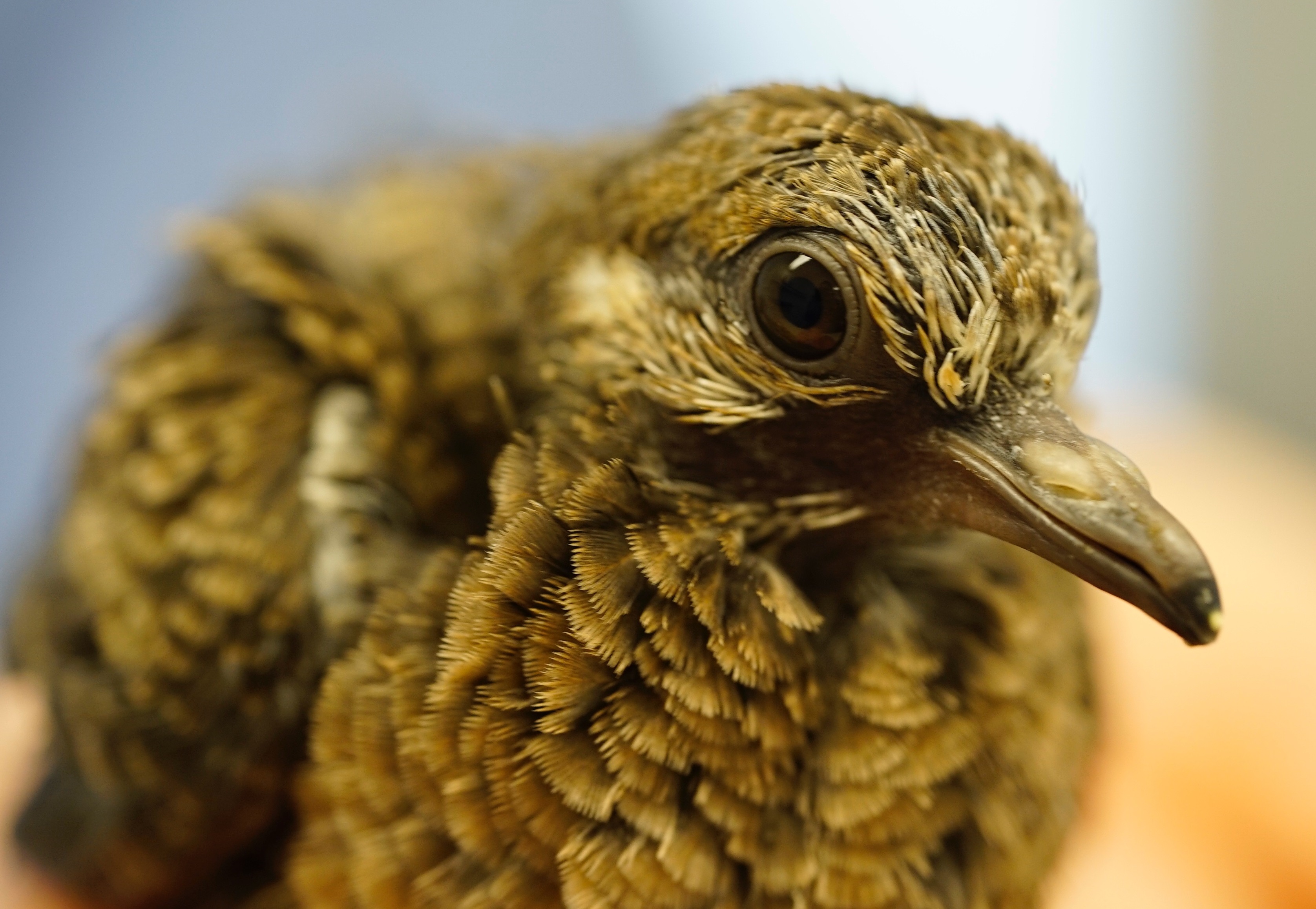
CWC treats many fledgling Mourning Doves. Photo by Jamie Pelayo

So far this year at California Wildlife Center, Mourning Doves are the second most common species seen. Exceeded only by the number of Mallard Ducks admitted, Mourning Doves make up 13% of all our animal patients.

If the world can be divided into those who consider this seemingly ubiquitous bird with its estimated US population of more than 400 million to be too prevalent, too present, too ordinaire to be worth much attention and those who find them interesting, this writer has recently migrated from the former to the latter group. Not only are they interesting, but also rather charming and even downright funny:

They’re Interesting…

The Coooo-OOOOH-woo-woo-woo cry that seems soooo mournful is actually a come-hither mating call made almost always by males.

Weighing in at a measly three to six ounces—get this—Mourning Doves have been clocked at 55 mph! As a figure of comparison, the Northern Flicker, at a similar weight, flies at 23 mph.

Unlike most birds that tend to gulp water and then rotate their heads, using gravity to bring it down their throats, Doves sip water. Their diet, composed mostly of hard, dry seeds, necessitates consumption of significantly greater quantities of water than many other birds. Birds are typically more vulnerable to predators when drinking water. Sipping is thus a form of risk-management.

And Charming…

Mourning doves remain with the same mate all breeding season long, and pairs tend to mate for life.

Mourning Dove dads do their share. On the nest, they incubate from mid-morning to mid-afternoon, while moms take over in the evening, going through the night. Males and females work together to feed their babies.

And Funny!

How the Mourning Dove became a symbol of peace is kind of a head-scratcher. Notice how other birds in the feeder keep their distance? Yep, they know if they get too close, they are in for one HECK of a pounding! Doves crouch low, ready to go the distance, scratching, biting with their beaks, even battering with their wings in a move called…boxing!

The Mourning Dove is a most engaging CWC patient. It’s our pleasure to care for them and return them to their wild home!

Share this entry
  • Share on Facebook
  • Share on X
  • Share on WhatsApp
  • Share on LinkedIn
  • Share on Reddit
  • Share by Mail
https://cawildlife.org/wp-content/uploads/2026/05/CWClogo.png 0 0 protectanimals https://cawildlife.org/wp-content/uploads/2026/05/CWClogo.png protectanimals2018-08-14 16:01:452018-08-14 16:02:35Everything You Ever Wanted to Know about Mourning Doves (but Maybe Never Thought to Ask)

LATEST POSTS

  • The Education Corner: RenestingMay 13, 2026 - 11:40 am
  • Rescuing Stranded Marine Mammals during an Outbreak of Avian InfluenzaMay 13, 2026 - 11:38 am
  • Wild BeginningsMay 13, 2026 - 11:33 am
  • Through Darkness back to FlightMay 13, 2026 - 11:30 am

Contact Us

P.O. Box 2022
Malibu, CA 90265
E-mail: admin@cawildlife.org

Contact Us

P.O. Box 2022
Malibu, CA 90265
Hotline Phone: +1 310 458-WILD (9453)
E-mail: admin@cawildlife.org

DONATE TO CWC
CWC Tax ID#95-4580790

SIGN UP FOR OUR NEWSLETTER

CLICK HERE TO SIGN UP

Quick Links

Privacy Policy
Financials & Legal Info

Join us on Facebook!

Categories

BLOG ARCHIVES

© California Wildlife Center | All Rights Reserved | Webmaster SV3 Designs
  • Link to Facebook
  • Link to X
  • Link to Youtube
  • Link to Instagram
  • Link to Mail
Link to: A Second Wave of Sea Lions Link to: A Second Wave of Sea Lions A Second Wave of Sea Lions Link to: Summer Internship at CWC: So Nice I Did It Twice! Link to: Summer Internship at CWC: So Nice I Did It Twice! Summer Internship at CWC: So Nice I Did It Twice!
Scroll to top Scroll to top Scroll to top

JOIN TODAY


Yes! Keep me updated about the animals at CWC

Enter your email address for the chance to win a private tour of CWC


    Your information will never be shared with a third party