
Rescuing Stranded Marine Mammals during an Outbreak of Avian Influenza
By Heather Henderson, Marine Mammal Program Manager
Each season, the marine mammal department recruits additional team members and holds refresher training sessions to prepare for the busy stranding season. Following a rigid life history, large numbers of recently weaned Northern Elephant Seal pups in distress strand on the Malibu beaches during March, April, and May.
Towards the end of February 2026, devasting news arrived – H5N1 (aka bird flu or avian influenza) was detected in a central California Northern Elephant Seal rookery. With the first pup of the season expected to arrive in early March, the stakes to prepare our team for enhanced response and safety measures increased overnight. Would we be able to continue normal rescue operations? As of May, we are pleased to report – yes!
New “Eyes on the Beach” monitoring along with a streamlined system to communicate animal observations was implemented. Once deemed safe and appropriate to proceed with rescue operations and donning additional PPE, the team brought ailing seals and sea lions into care. New arrivals were placed on a 72-hour quarantine prior to joining the other patients. During this period, daily health assessments were performed, and we closely monitored each elephant seal pup’s behavior.
In our small facility, achieving a successful quarantine period required every team member to follow meticulous gear changes and sanitizing steps. As rehabilitators, we are constantly learning, improving, and incorporating new and improved safety techniques.
Since the winter outbreak of avian influenza was detected in California, we have performed 67 marine mammal responses including the rescue of 21 Northern Elephant Seal pups – currently in care. All the hard work and attention to detail by our team paid off. No contagions were introduced into the marine mammal patient population or our rescue personnel. The first Northern Elephant Seal pup [aka Violet] is cleared to return to his ocean home. We are pleased to hear that his kin up at the rookery are no longer displaying signs and symptoms of this challenging virus, so when he heads there to haul out for his annual molt, the environment will be a more welcoming one.
Marine mammal response requires a community of caring and dedicated individuals coming together to be successful. We sincerely thank you for being part of that community and continuing to support our life saving work!
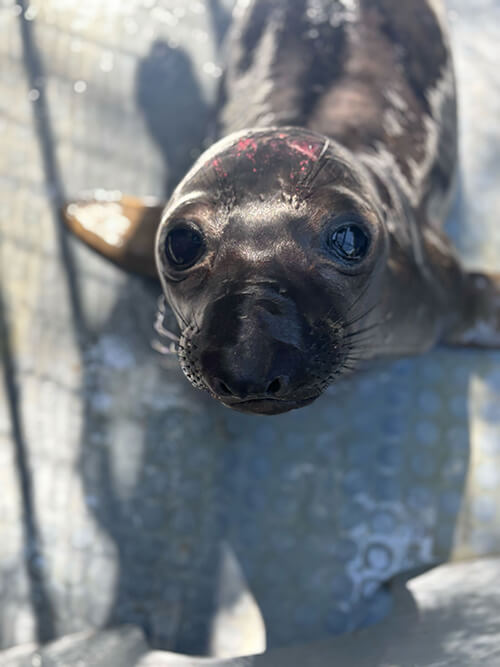
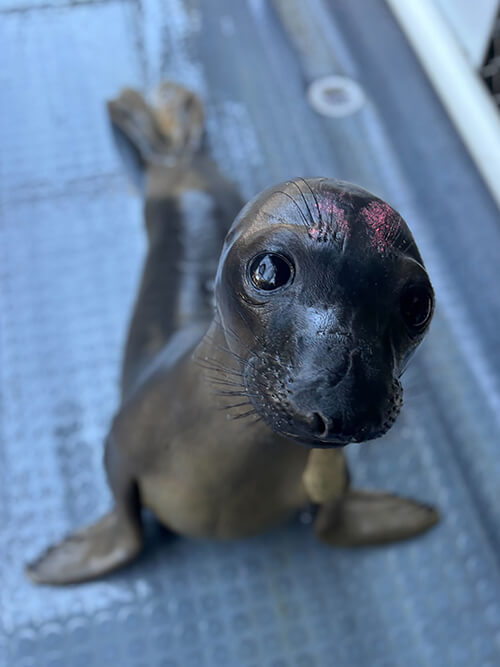
Northern Elephant Seal pups in care