
Exercising Raptors Back to Health
By Jennifer Guess, Senior Wildlife Technician
Photos by Jenn Guess
Here at California Wildlife Center (CWC) we see a lot of raptors with severe injuries that require many weeks even months of rehabilitation. The raptor family includes all types of hawks and owls. As the birds heal inside the ICU they do not get the daily exercise they would receive in the wild. Due to most raptors lengthy recuperation period, the vast majority need to be exercised at the end of the rehabilitation process to build up flight muscles before they can be released back into the wild.
When a raptor reaches the point in his recovery plan where he is stable and in good body condition he can be moved into one of our large outside aviaries. Raptors fly many miles every day and it is difficult to provide enough space in an enclosure where a bird can get adequate exercise on his own. One method of exercising raptors is to encourage them to fly from one end of the enclosure to the other. The drawbacks of this method is that it can be stressful on newer patients sharing the large flight aviary, and on patients in nearby flight aviaries. Plus, most birds learn very quickly how to navigate the enclosure with as little exertion as possible.
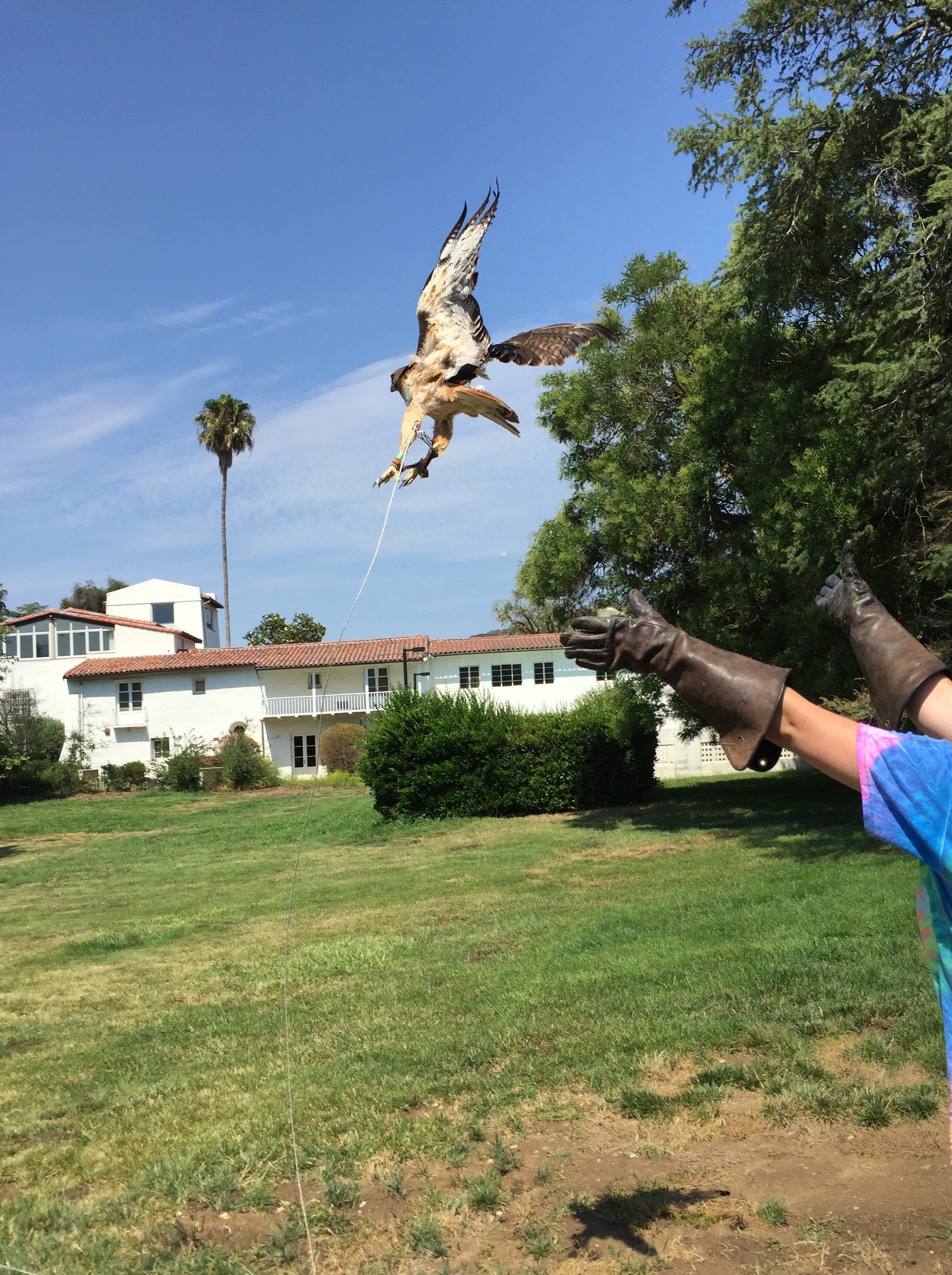
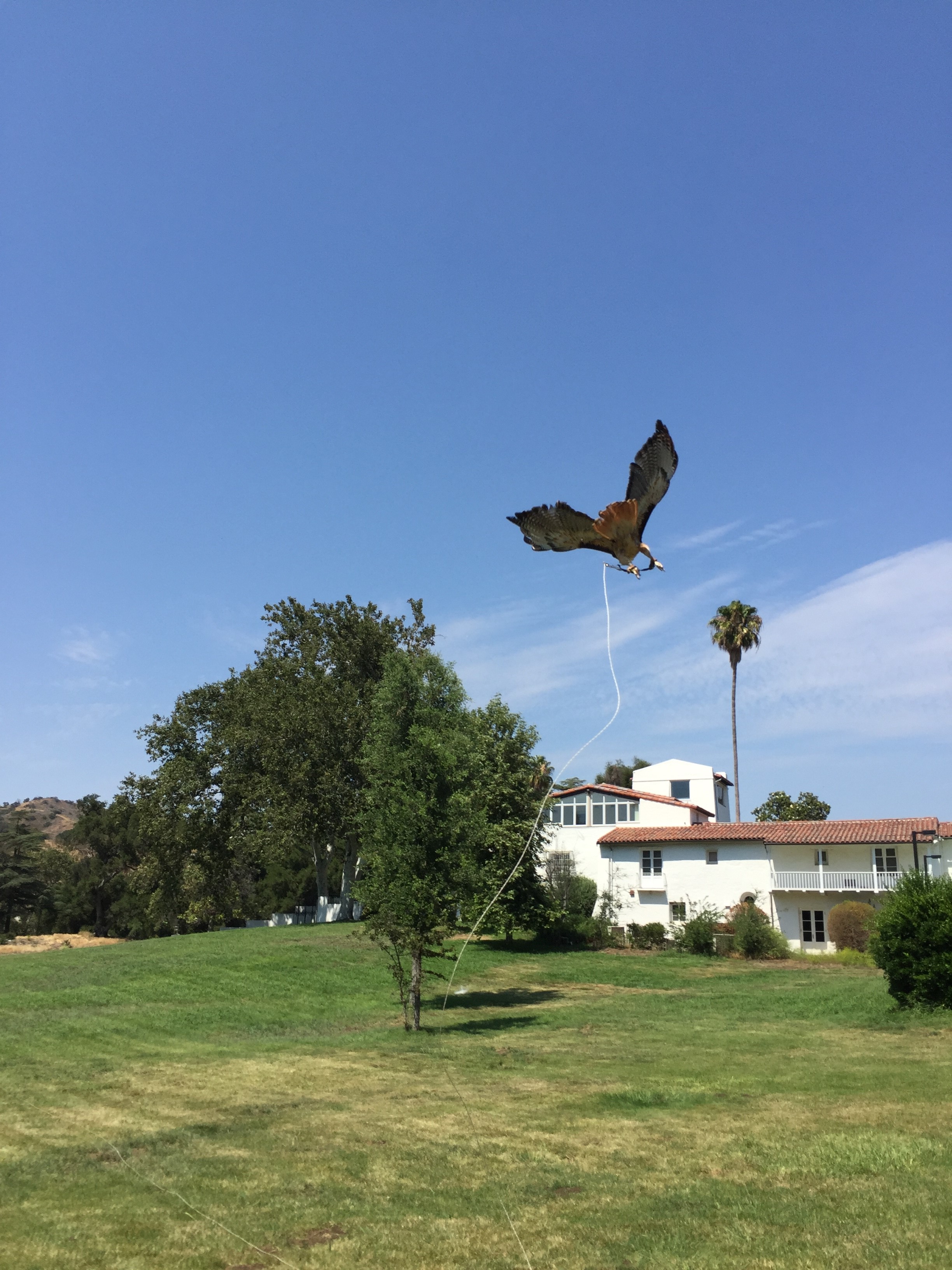
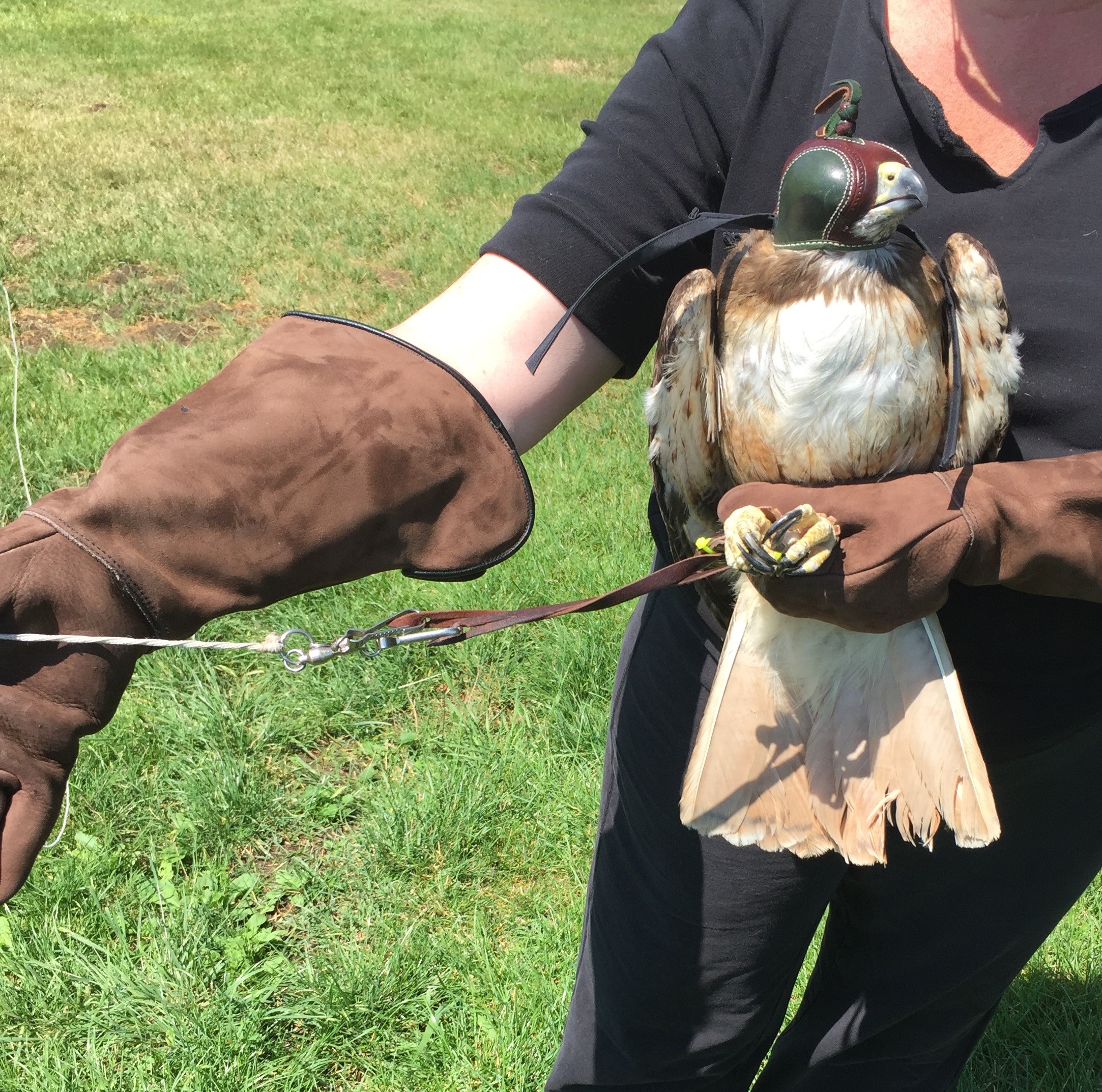
At CWC we use a method of exercising called creancing. During creancing the raptor is caught up from the outside aviary. A hood is placed over the head and eyes to reduce the stress level of the bird. Leather anklets are attached to the bird’s legs, above the feet. The bird is then transported to a nearby open
field. Leather strips, called jesses, are fed through the anklets and hang down below the bird’s feet. A light weight line with a weighted tube is connected to the jesses.
When everything is ready to go, the hood is removed and the bird is let go and he takes flight. He flies across the field and when he reaches the end of the line the weight in the tube starts to add resistance. As the bird drags the weight, he quickly tires out and lands on the ground.
It is important to do a lot of prep work before creancing a raptor. The weight of the tube must be adjusted depending on the weight of the patient. If the tube is too heavy, it could cause injury to the bird when he reaches the end of the line. If the tube is too light, the bird might be able to fly further than expected and into an obstacle like a nearby tree. The line must also be carefully measured before each creancing session. It should be long enough so the patient can gain lift and propel forward before feeling the weight of the tube but it should not be so long that the patient can reach obstacles.
During the flight, important information is being collected. The majority of our creancing is performed by Malibu resident and longtime CWC volunteer, Diana Mullen. She takes careful note of how far each patient flies, how much lift they are able to obtain, whether the wings are symmetrical during flight, and how quickly the bird tires out. She works very closely with our veterinarian, Dr. Duane Tom, and knows the history of each patient before taking them out for creancing. It is important to not push the patient too hard. Sometimes a single flight is enough for a creancing session. Depending on the patient, a bird might have three or four flights in a session. Each piece of information is carefully recorded in the patient’s record so Dr. Tom can adjust their individual plans. Volunteers are able to assist Diana during these creancing tests and all agree that seeing the raptors soar into the air serves as an excellent reminder of why we do the hard work of rehabilitation for these beautiful animals.