• Link to Facebook
  • Link to X
  • Link to Youtube
  • Link to Instagram
  • Link to Mail
MEDICAL EMERGENCY? CALL: +1 310 458-WILD(9453)
DONATE
California Wildlife Center
  • Home
  • About Us
    • What We Do
    • Our Team
    • Education
  • Animal Resources
    • Medical Emergency
    • Co-Existing with Wildlife
    • FAQ
    • Gallery
  • Support Us
    • Ways to Support Us
      • Donate & Support Wildlife
      • Conservation Circle
      • Sponsor an Animal
      • Our Wish List
      • Other Ways to Give
  • Get Involved
    • Employment
    • Volunteer
      • Become a Volunteer
      • Internships
      • Externships
  • Events
  • News & Blog
    • Newsletters
    • Patient of the Week
  • Contact
  • Click to open the search input field Click to open the search input field Search
  • Menu Menu

Wildlife Rescue Calls

November 4, 2025/in Birds, CWC, Terrestrial Animals, Wildlife Medicine

If you give a squirrel a cookie…Each day we receive a variety of calls and we never know where they might lead. While many make us smile or laugh, some are emotional. These calls remind us that behind every rescue is a person who stopped what they were doing to help an animal in need. That gives us hope.

Read more
https://cawildlife.org/wp-content/uploads/2026/05/CWClogo.png 0 0 Saras Venkatram https://cawildlife.org/wp-content/uploads/2026/05/CWClogo.png Saras Venkatram2025-11-04 12:33:492025-11-04 12:33:49Wildlife Rescue Calls

A Tail of Survival

May 19, 2025/in Terrestrial Animals, Wildlife Medicine

California Wildlife Center recently treated an almost 8-pound bobcat who was rescued from a burn area in Sierra Madre after the Eaton Fire. On January 29, the bobcat was admitted to Pasadena Humane emaciated, with burns on her paws and singed fur on her backside.

Read more
https://cawildlife.org/wp-content/uploads/2026/05/CWClogo.png 0 0 Saras Venkatram https://cawildlife.org/wp-content/uploads/2026/05/CWClogo.png Saras Venkatram2025-05-19 17:19:482025-05-20 11:36:28A Tail of Survival

The Fox and the Fence: A Tale of Healing and Care

February 18, 2025/in CWC, Terrestrial Animals

In December, we were contacted by an Agoura Hills animal control officer, letting us know their team was going out to rescue a Gray Fox sitting in daylight atop a high chain-link fence, refusing to jump down. This is highly abnormal for a fox.

Read more
https://cawildlife.org/wp-content/uploads/2026/05/CWClogo.png 0 0 Saras Venkatram https://cawildlife.org/wp-content/uploads/2026/05/CWClogo.png Saras Venkatram2025-02-18 09:13:072025-02-18 09:15:45The Fox and the Fence: A Tale of Healing and Care

An Unexpected Visitor from the Wild

November 3, 2024/in Terrestrial Animals

As fall has finally arrived, most of our young patients are ready to return to their wild homes. Each year, California Wildlife Center (CWC) rehabilitates injured, orphaned or abandoned young Mule Deer. This year, we cared for four fawns.

Read more
https://cawildlife.org/wp-content/uploads/2026/05/CWClogo.png 0 0 Saras Venkatram https://cawildlife.org/wp-content/uploads/2026/05/CWClogo.png Saras Venkatram2024-11-03 18:14:112025-02-18 09:14:40An Unexpected Visitor from the Wild

NHM Avian and Mammal Collections

August 19, 2024/in CWC, Terrestrial Animals

California Wildlife Center staff and volunteers recently had the unique opportunity to go on a behind-the-scenes tour of the avian and mammal collections department of the Los Angeles Natural History Museum (NHM).

Read more
https://cawildlife.org/wp-content/uploads/2026/05/CWClogo.png 0 0 Saras Venkatram https://cawildlife.org/wp-content/uploads/2026/05/CWClogo.png Saras Venkatram2024-08-19 10:09:232024-08-19 12:18:38NHM Avian and Mammal Collections

Are You My Mother? When to Intervene

May 28, 2024/in CWC, Terrestrial Animals

Encountering a young animal in the wild can be an exhilarating experience. Although it is natural to have the initial instinct to intervene in an attempt to protect the animal, stepping in without proper knowledge can do more harm than good.

Read more
https://cawildlife.org/wp-content/uploads/2026/05/CWClogo.png 0 0 Saras Venkatram https://cawildlife.org/wp-content/uploads/2026/05/CWClogo.png Saras Venkatram2024-05-28 11:38:432024-05-29 08:50:07Are You My Mother? When to Intervene

Opossums: More Friend Than Foe

February 21, 2017/in Terrestrial Animals

By Anna Noble, Administrative Assistant
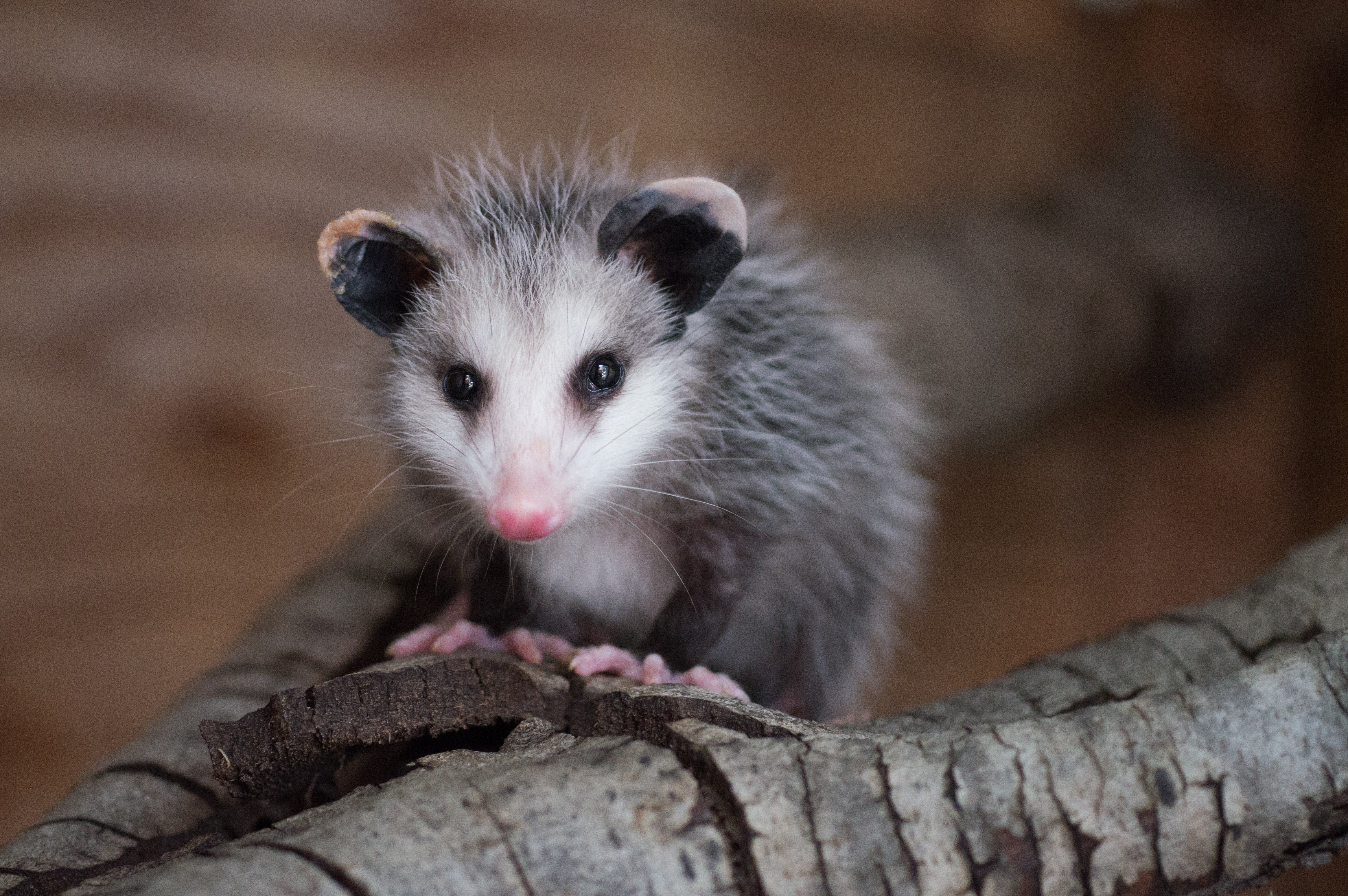
Virginia Opossum

Young Virginia Opossum
Photo by Kim Barker

California Wildlife Center admits an average of 250 opossums yearly.  Of this number, 40-50 are adults, while the remainder are orphans.  Most adult opossums who are admitted have experienced bodily injury due to trapping, predation, gun shots, or encounters with vehicles on roadways.  Joeys (the word for baby opossums) that are seven inches or longer should be left if found alone unless they show obvious sign of injury.  Smaller joeys should come to CWC for treatment.

While the opossum is sometimes perceived as a “nuisance” animal, they serve a pivotal role in the ecosystem.  Opossums act as nature’s double-duty pest control and sanitation.  They eat mice, rats, snakes, worms, slugs and insects, rotting fruits and vegetables, and even garbage.  As they have an unusually high need for calcium, they often eat the skeletons of rodents and road kill for a boost.

Opossums are incorrectly perceived as unclean and disease-ridden animals.  In fact, they bathe and groom themselves nearly as often as house cats.  They also have very powerful immune systems which fend off many diseases.  Opossums almost never have rabies, as their low body temperature makes it difficult for the virus to survive.  They are even immune to the venoms of snakes, scorpions and bees, as well as to ricin and botulinum toxin!  Despite having some similar physical traits, opossums are not related to rodents and are actually the only marsupial found in North America.

Despite their tendency to appear vicious when showing their fifty teeth, opossums are rarely looking for trouble.  They are very docile animals, and when threatened their first instinct is to simply run away.  If danger persists, they will show their teeth and make a hissing sound.  And when neither of these options prevail, they fall into a comatose state in which their bodies temporarily freeze, causing them to appear lifeless.  This defense mechanism is known as “playing possum.”

https://cawildlife.org/wp-content/uploads/2026/05/CWClogo.png 0 0 protectanimals https://cawildlife.org/wp-content/uploads/2026/05/CWClogo.png protectanimals2017-02-21 22:51:452017-02-21 23:48:04Opossums: More Friend Than Foe

LATEST POSTS

  • The Education Corner: RenestingMay 13, 2026 - 11:40 am
  • Rescuing Stranded Marine Mammals during an Outbreak of Avian InfluenzaMay 13, 2026 - 11:38 am
  • Wild BeginningsMay 13, 2026 - 11:33 am
  • Through Darkness back to FlightMay 13, 2026 - 11:30 am

Contact Us

P.O. Box 2022
Malibu, CA 90265
E-mail: admin@cawildlife.org

Contact Us

P.O. Box 2022
Malibu, CA 90265
Hotline Phone: +1 310 458-WILD (9453)
E-mail: admin@cawildlife.org

DONATE TO CWC
CWC Tax ID#95-4580790

SIGN UP FOR OUR NEWSLETTER

CLICK HERE TO SIGN UP

Quick Links

Privacy Policy
Financials & Legal Info

Join us on Facebook!

Categories

BLOG ARCHIVES

© California Wildlife Center | All Rights Reserved | Webmaster SV3 Designs
  • Link to Facebook
  • Link to X
  • Link to Youtube
  • Link to Instagram
  • Link to Mail
Scroll to top Scroll to top Scroll to top

JOIN TODAY


Yes! Keep me updated about the animals at CWC

Enter your email address for the chance to win a private tour of CWC


    Your information will never be shared with a third party