
The Education Corner: Nests
By Cambria Wells, Education and Outreach Manager
With the arrival of Spring, CWC always alerts our neighbors to stop trimming trees and bushes unless absolutely necessary. We warn about giving space to nesting animals, particularly nesting birds. But bird nests can be hard to find. So, what are you really looking for around your home?
Cup: Cup nests are the most common nest type found around homes. The small cup nests of many backyard songbirds often include a variety of materials including grasses, small twigs, lichen, moss, animal fur, and even spiderwebs.
Suspended: Suspended nests may be cups or more elaborate, dome-shaped or sock-like structures. These are often either woven from vegetation, or are adherent structures made by combining mud and saliva.
Cavity: Some birds seek additional protection by constructing their nest within a sheltered cavity, such as the holes made by an Acorn Woodpecker.
Platform: Platform nests come in a variety of styles, but in backyard environments they are typically constructed of sturdy sticks on a flat surface. Some may be large and elaborate, like that of many hawks, and others may be thin or hastily constructed, like many doves’ nests.
Though we’ve barely scratched the surface of the diversity of nesting birds, looking out for these four nest styles will go a long way in helping to avoid disturbing a growing family. Remember to save tree trimming for November through January and give active nests their space. If you’re lucky enough to find a nest where you can safely observe it from a distance, take your time to enjoy nature at work!
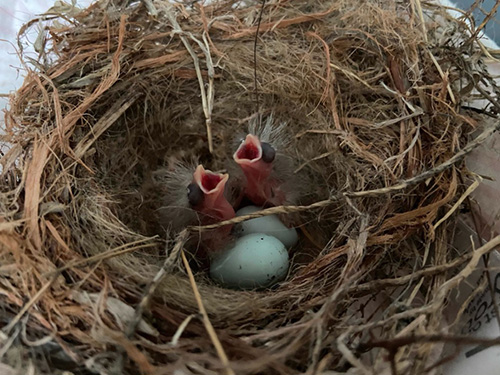
Finch nest (classic cup nest)
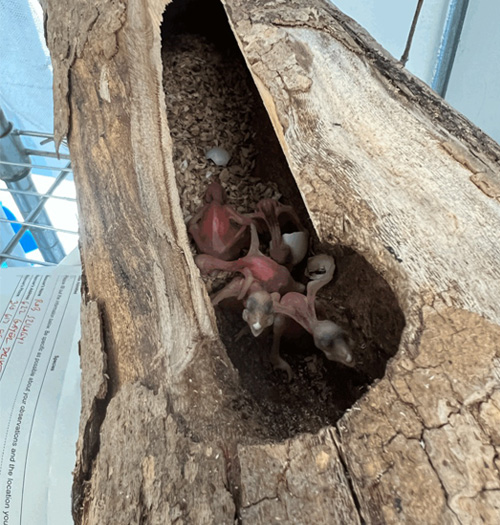
Acorn Woodpecker nest cavity (cut open by tree care workers)