
Caring for Bandit-Faced Babies
By Jennifer Brent, Executive Director
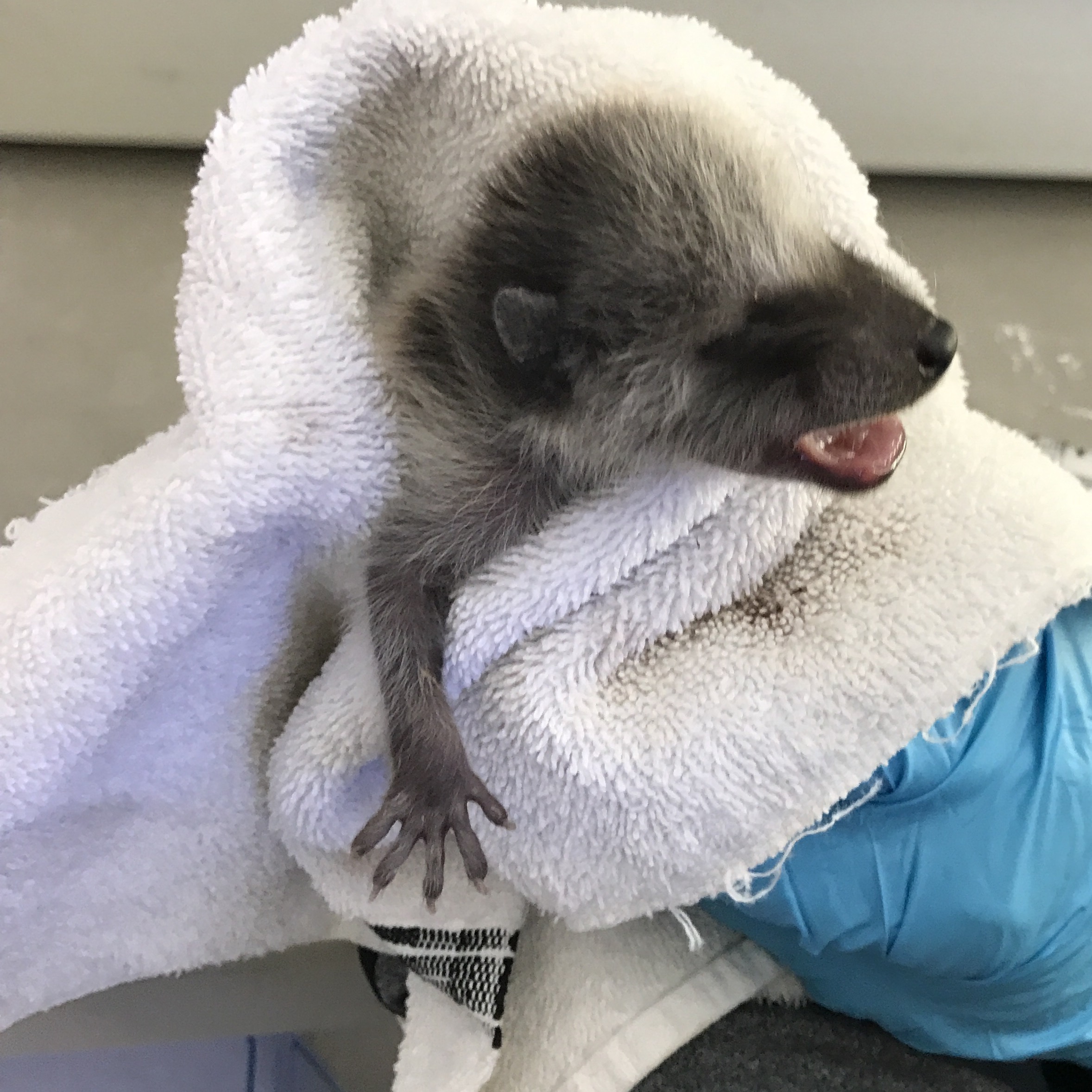
Newborn Raccoon Kit
Photo by Jennifer Brent
Which animal has five fingers but no thumb? This animal is sometimes known as a “trash panda” and has a mixed reputation in urban areas. It’s a raccoon, of course!
While we don’t care for raccoons on-site at CWC, we do have a few amazing and dedicated home care volunteers who will raise orphaned kits from young babies to juveniles ready for release. Due to the types of diseases that the raccoons can carry and CWC’s limitations, all of them are cared for off-site.
Generally, members of the public who find baby raccoons and contact us. The rescuer may have scared the mother away and then found the babies, or they have found a single kit by themselves. Raccoons give birth in the Spring with two to five kits in a litter. Our home care volunteers feed them milk replacement and gradually add solid food, and the babies are generally weaned at 16 weeks. Once they are old enough to find food on their own, they are released back into the wild. Adult raccoons are omnivores and eat invertebrates, vegetables, and vertebrates such as rats, frogs, and fish.
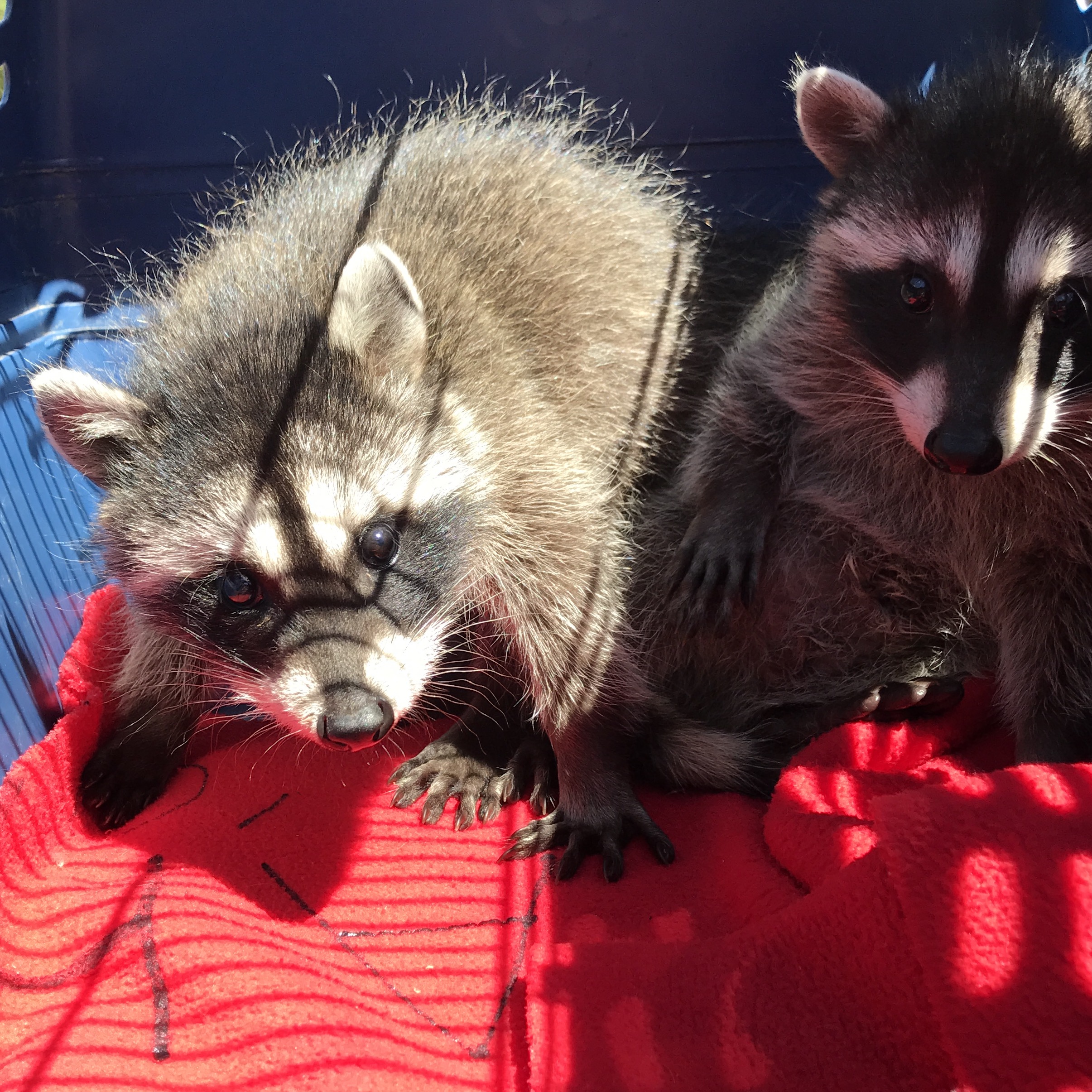
Juvenile Raccoons
Photo by Jennifer Brent
“The raccoon babies are playful and love to explore,” says Glenn Ellis, longtime homecare volunteer, adding “they are masters at figuring things out.” Raccoons are known for being smart and have been compared to primates in their potential for intelligence. Many people think that raccoons must wash their food prior to consumption. However, studies have shown that the cleanliness of food bears no influence. Instead, raccoons put their food underwater to better feel it—the water moistens their paws so that their tactile perception is increased.
Raccoons can be considered a nuisance animal in Los Angeles’ urban environment. Every year we receive calls about raccoons who have given birth inside peoples’ garages or attics. The best way to deter a raccoon is exclusion—sealing your home properly so that any unwanted guest (rodents, raccoons, skunks, etc.) cannot enter. The second best way is to be careful about trash disposal. An unlatched trash can is an invitation to any animal for a free meal. Additionally, feeding outdoor cats is like setting out a buffet for any outdoor animals from rodents to reptiles to raccoons. While we vaccinate all of our raccoons against distemper and parvo virus, raccoons in the wild can harbor diseases that are dangerous for humans and pets.
Hunting for raccoon fur and meat has existed in North America for hundreds of years reaching its peak in the 1970s with 5.2 million raccoons killed in a single year, mainly for their fur. It wasn’t until the 1990s that raccoon fur went out of fashion and hunting diminished.
Each year our home care volunteers Glenn Ellis, Sharon Leckbee, and Michele Morse care for 25-30 raccoon kits. We do not accept adult raccoons at CWC due to our limitations for enclosures. If you have a nuisance adult raccoon, please contact your area’s animal care and control agency.