
• Link to Facebook
  • Link to X
  • Link to Youtube
  • Link to Instagram
  • Link to Mail
MEDICAL EMERGENCY? CALL: +1 310 458-WILD(9453)
DONATE
California Wildlife Center
  • Home
  • About Us
    • What We Do
    • Our Team
    • Education
  • Animal Resources
    • Medical Emergency
    • Co-Existing with Wildlife
    • FAQ
    • Animal Profiles
    • Gallery
  • Support Us
    • Ways to Support Us
      • Donate & Support Wildlife
      • Conservation Circle
      • Sponsor an Animal
      • Our Wish List
      • Other Ways to Give
  • Get Involved
    • Employment
    • Volunteer
      • Become a Volunteer
      • Internships
      • Externships
  • Events
  • News & Blog
    • In the News
    • Newsletters
    • Patient of the Week
    • Edison
    • From the Community
    • Videos
    • Gallery
    • Media Requests
  • Contact
  • Store
  • Click to open the search input field Click to open the search input field Search
  • Menu Menu

West Nile Virus in CWC’s American Patients
September 8, 2017/in Birds, Wildlife Medicine

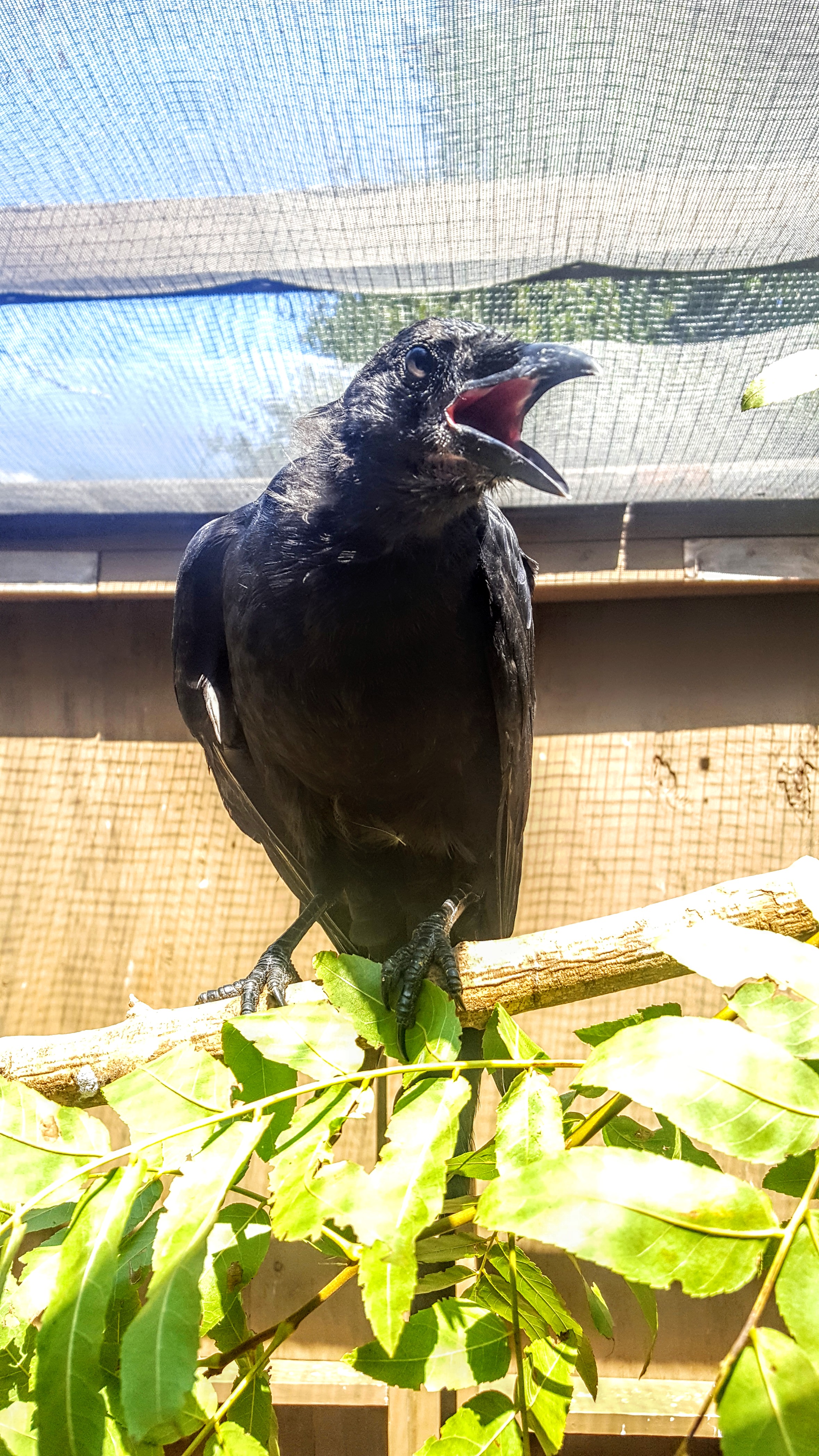
Photo by Alyssa Schlange

By Melissa Hartman, Administrative Assistant

Of all the American Crow patients we see, 15% carry the disease.

In 2016, California Wildlife Center admitted 238 local American crows for a variety of reasons—chicks apparently abandoned by their parents, fledglings fallen out of a nest too high to allow them to be replaced, adults suffering from broken limbs and open wounds. But more than 40 of these birds came into our Center with troubling symptoms including a lack of balance both at rest and while mobile, weakness, lethargy, even seizures. West Nile Virus—WNV—is listed as the cause of death on 37 of these medical records.

WNV has hit American Crows particularly hard. In the summer of 1999, the disease first appeared in New York City, where a dead crow at the Bronx Zoo foreshadowed what was soon to come. Within four months, tens of thousands of crows perished over the tri-state area. Tests conducted indicated that for this sleek, intelligent bird, the disease was 100-percent fatal. Many other species, from jays to sparrows to finches, also proved susceptible. Within five years, WNV had spread to the Bay Area leaving millions of birds dead in its wake.

Here at CWC we see a significant population presenting with the telling neurological signs of WNV: limb weakness, head twitching, and paralysis. Our treatment is supportive care.  We use anti-inflammatory medications and maintain their nutritional requirements. Mild cases may recover but sadly severe cases seldom do. Those that recover reportedly are immune to future infections by the virus.

WNV At-A-Glance

  • West Nile Virus can be fatal to humans; less than 1% of those infected
  • However, 80% of infected people will not show any symptoms
  • Flu-like symptoms mainly transmitted through mosquito bites, not through other animals
  • Primarily affects birds, but also bats, horses, cats, dogs, chipmunks, skunks, squirrels, rabbits
  • Vaccines are available for horses but not for people

You Can PREVENT WNV

Standing water is the culprit. Reduce the number of mosquitoes around your home by emptying water from gardening containers, buckets, gutters, pool covers, pet water dishes and birdbaths. Monitor sprinkler runoff as well. The most effective way to AVOID WNV is to prevent mosquito bites:

  • Use insect repellents
  • Wear long sleeves and pants from dusk through dawn
  • Install or repair screens

You can help us reduce the number of American Crow admissions by clearing standing water. Make sure in the coming months when mosquito activity is high, you stay safe in the outdoors and have fun!

Share this entry
  • Share on Facebook
  • Share on X
  • Share on WhatsApp
  • Share on LinkedIn
  • Share on Reddit
  • Share by Mail
https://cawildlife.org/wp-content/uploads/2026/05/CWClogo.png 0 0 protectanimals https://cawildlife.org/wp-content/uploads/2026/05/CWClogo.png protectanimals2017-09-08 20:32:352017-09-12 16:45:54West Nile Virus in CWC’s American Patients

LATEST POSTS

  • The Education Corner: RenestingMay 13, 2026 - 11:40 am
  • Rescuing Stranded Marine Mammals during an Outbreak of Avian InfluenzaMay 13, 2026 - 11:38 am
  • Wild BeginningsMay 13, 2026 - 11:33 am
  • Through Darkness back to FlightMay 13, 2026 - 11:30 am

Contact Us

P.O. Box 2022
Malibu, CA 90265
E-mail: admin@cawildlife.org

Contact Us

P.O. Box 2022
Malibu, CA 90265
Hotline Phone: +1 310 458-WILD (9453)
E-mail: admin@cawildlife.org

DONATE TO CWC
CWC Tax ID#95-4580790

SIGN UP FOR OUR NEWSLETTER

CLICK HERE TO SIGN UP

Quick Links

Privacy Policy
Financials & Legal Info

Join us on Facebook!

Categories

BLOG ARCHIVES

© California Wildlife Center | All Rights Reserved | Webmaster SV3 Designs
  • Link to Facebook
  • Link to X
  • Link to Youtube
  • Link to Instagram
  • Link to Mail
Link to: Garbage Impacts All Kinds of Animals Link to: Garbage Impacts All Kinds of Animals Garbage Impacts All Kinds of Animals Link to: Being an Intern at CWC Link to: Being an Intern at CWC Being an Intern at CWC
Scroll to top Scroll to top Scroll to top

JOIN TODAY


Yes! Keep me updated about the animals at CWC

Enter your email address for the chance to win a private tour of CWC


    Your information will never be shared with a third party