
The Lesson of the Lost Gull
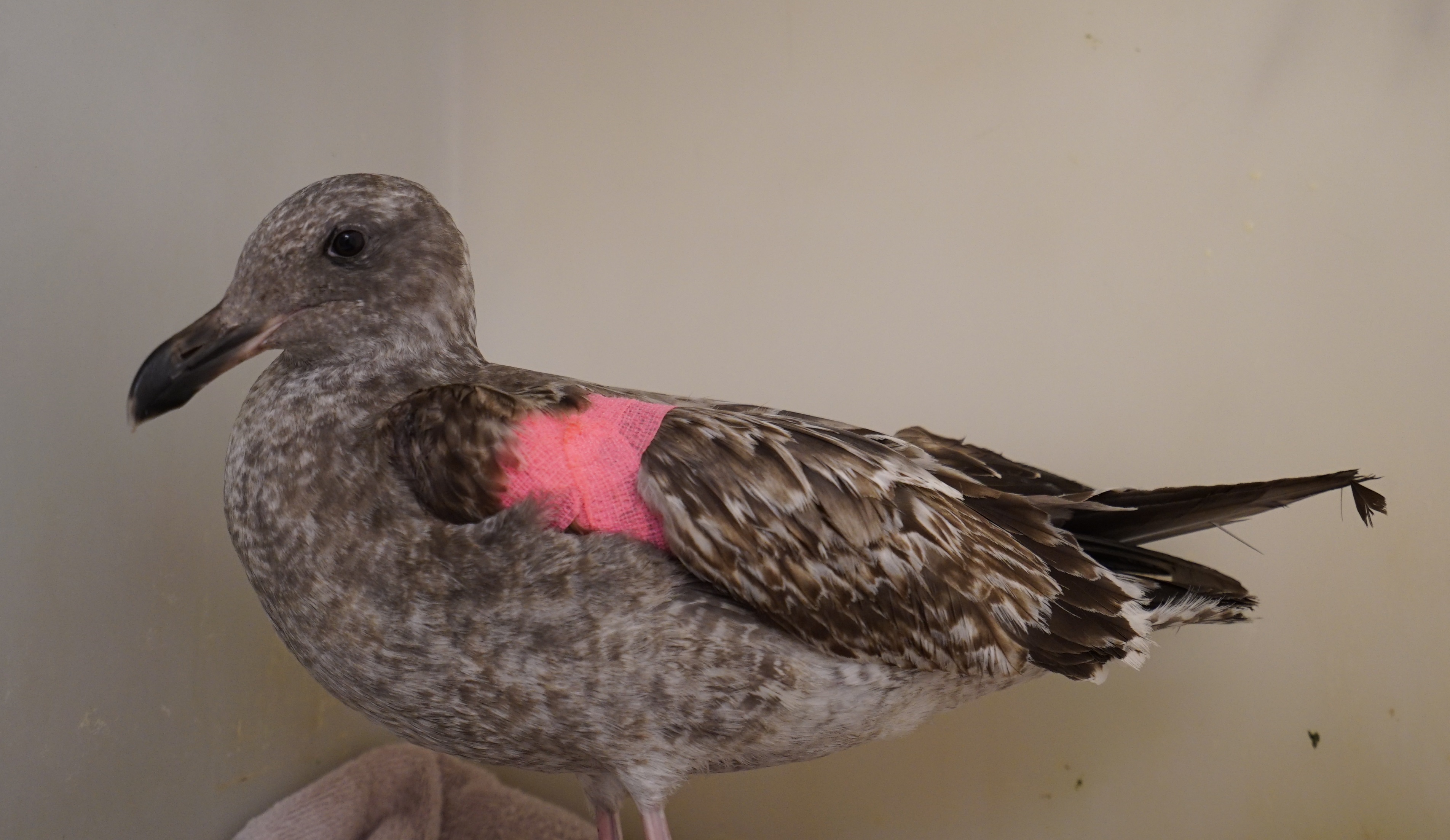
CWC cares for around 100 gulls every year. Photo by Jamie Pelayo
by Corby Sandberg, Volunteer
I was almost home from my volunteer shift at California Wildlife Center when, to my surprise, in the middle of a busy road in full-on five o’clock traffic, I saw a Gull walking around, seemingly lost. Instantly I pulled off the road, stopped my car, and ran over in an effort to keep the bird from being hit. I waved my hands to get him off the road, and he moved to the sidewalk, temporarily safe from the danger of passing cars.
One of my volunteer tasks at CWC is answering the phone and talking callers through this sort of situation. I request a photo of the animal to be texted to our hospital staff cell phone and, if they are a species we are authorized to treat, I ask the caller to bring it to us. I always tell people to try not to get too caught up in the animal’s predicament that they unwittingly place themselves in danger. So many variables, but protocol nonetheless. Now, I found myself following my own advice!
Waving all the traffic to go around me (thankfully, no one was honking at me), I observed this seemingly confused and docile creature. He was a beautiful bird, but sadly so very much out of his domain: high up above, circling round and round with its skymates, circling, circling…. I knew something had to be very wrong.
It’s best not to remove wild animals from their environment unless absolutely necessary. That’s another reason we ask people to call us before coming by. Every year, we see many young “rescues” brought to us by well-meaning members of the public. Inadvertently, they separate mothers from babies and, sadly, such rescues may spell doom. But, because of my CWC experience, this was clearly not the case. I keep a cardboard animal carrier and a towel for unfortunate events such as this and, after much observation and careful thought, wrapped the Gull in the towel and put him in the carrier. The bird remained docile and didn’t fight me at all. It seemed too easy.
I drove back to CWC, calling to let them know the deal. After I arrived, a kind technician took the bird from my carrier, weighed him, and examined the webbed feet, the wings. She showed me one wing in perfect condition, and then the other, which had been broken at some point, and not healed in a way that allowed for flight. The wing was crooked; this bird never would take to the sky again.
If the Gull had been brought to CWC immediately after its injury, then it is likely our vet could have set the break, allowing for a complete recovery, and then release…to enjoy the sky once again. The bird had showed absolutely no fear. Is it possible that someone rescued it after its accident and kept it–believing “I can save this bird”? And then, is it possible, after the break hardened and seemingly healed, just let it go?
This is my takeaway, the lesson this beautiful, tragic creature taught me: Do not keep wild animals at your house, thinking you can “save” them. Let professionals decide what the correct thing is to do–for the dignity and health of all creatures.
Thank you for this good story, which contains multiple lessons. I like your point of view as a volunteer coming upon a possible rescue, the thoughts going thru your head and considerations based on your experience. Very helpful for me, a novice wildlife protector.