
• Link to Facebook
  • Link to X
  • Link to Youtube
  • Link to Instagram
  • Link to Mail
MEDICAL EMERGENCY? CALL: +1 310 458-WILD(9453)
DONATE
California Wildlife Center
  • Home
  • About Us
    • What We Do
    • Our Team
    • Education
  • Animal Resources
    • Medical Emergency
    • Co-Existing with Wildlife
    • FAQ
    • Animal Profiles
    • Gallery
  • Support Us
    • Ways to Support Us
      • Donate & Support Wildlife
      • Conservation Circle
      • Sponsor an Animal
      • Our Wish List
      • Other Ways to Give
  • Get Involved
    • Employment
    • Volunteer
      • Become a Volunteer
      • Internships
      • Externships
  • Events
  • News & Blog
    • In the News
    • Newsletters
    • Patient of the Week
    • Edison
    • From the Community
    • Videos
    • Gallery
    • Media Requests
  • Contact
  • Store
  • Click to open the search input field Click to open the search input field Search
  • Menu Menu

Warm Weather Friends

March 5, 2021/2 Comments/in Terrestrial Animals

By Cori Carlson, Administrative Assistant
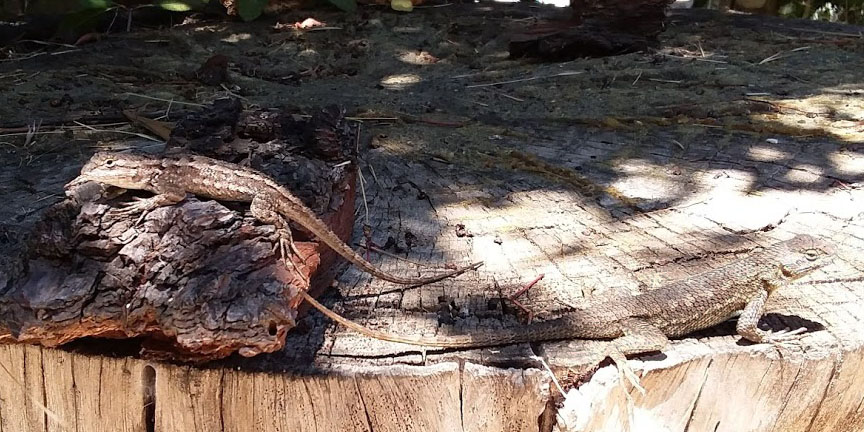
Two Western Fence Lizards, Photo by Heather Patrice Brown

In Spring, we all expect to see lots of baby squirrels and baby birds. But here in Southern California, as the weather warms up, we also start seeing more activity from our local lizards. One of the most common species found in the Santa Monica Mountains is the Western Fence Lizard, appropriately named because they are often spotted running along fences. California Wildlife Center (CWC) admitted seven of these small reptiles last year. The majority of these patients were injured by a house cat or wild predators. In the past, we have also admitted lizards who were unintended victims of glue traps. While these lizards are being rehabilitated at CWC, our technicians provide a diet of mealworms, flies, fruit flies and crickets similar to what they eat in the wild.

Growing up to 8.4 inches in length, Western Fence Lizards are covered with gray, tan and brown scales. This camouflage, though, hides a secret which earned them the nickname “blue-bellies.” Adult males have bright blue patches on their stomach and neck which makes them stand out to females and helps attract mates. You will often see male Western Fence Lizards doing push-ups to show off their handsome colors and warn away other males during mating season.

Cold-blooded, these lizards regulate their body temperature by moving in and out of the sun. This is why we see them out during the day often sunning themselves on paths, rocks, and fences. Unfortunately sunbathing also can make them an easy target. An encounter with a domestic pet or natural predator can result in lacerations or puncture wounds. To help protect themselves from these injuries, the small lizards have fast reflexes (maybe because all of those push-ups) and are able to drop their tail to escape predators and regrow it within 3-5 weeks.

Western Fence Lizards are more than just good food for our local predators; they are directly beneficial to humans by lowering the occurrence of Lyme Disease. When infected ticks feed on these reptiles, a protein in their blood kills the bacteria that causes Lyme disease, cleansing the tick of the disease-causing microbes.

CWC has already received our first two Western Fence Lizards of the year. As we head into one of our busiest seasons, we are ready to admit many more. To keep our reptile friends healthy (and out there contributing to the health of humans), keep cats inside and consider alternatives to pesticides or glue traps in your garden.

Share this entry
  • Share on Facebook
  • Share on X
  • Share on WhatsApp
  • Share on LinkedIn
  • Share on Reddit
  • Share by Mail
https://cawildlife.org/wp-content/uploads/2026/05/CWClogo.png 0 0 protectanimals https://cawildlife.org/wp-content/uploads/2026/05/CWClogo.png protectanimals2021-03-05 16:26:182021-06-09 22:32:10Warm Weather Friends
2 replies
  1. DJ Colwell
    DJ Colwell says:
    March 16, 2021 at 3:45 am

    I really enjoyed this article! The part about Lyme disease was fascinating.

  2. protectanimals
    protectanimals says:
    March 16, 2021 at 5:29 pm

    Thank you for your kind words, DJ!

Comments are closed.

LATEST POSTS

  • The Education Corner: RenestingMay 13, 2026 - 11:40 am
  • Rescuing Stranded Marine Mammals during an Outbreak of Avian InfluenzaMay 13, 2026 - 11:38 am
  • Wild BeginningsMay 13, 2026 - 11:33 am
  • Through Darkness back to FlightMay 13, 2026 - 11:30 am

Contact Us

P.O. Box 2022
Malibu, CA 90265
E-mail: admin@cawildlife.org

Contact Us

P.O. Box 2022
Malibu, CA 90265
Hotline Phone: +1 310 458-WILD (9453)
E-mail: admin@cawildlife.org

DONATE TO CWC
CWC Tax ID#95-4580790

SIGN UP FOR OUR NEWSLETTER

CLICK HERE TO SIGN UP

Quick Links

Privacy Policy
Financials & Legal Info

Join us on Facebook!

Categories

BLOG ARCHIVES

© California Wildlife Center | All Rights Reserved | Webmaster SV3 Designs
  • Link to Facebook
  • Link to X
  • Link to Youtube
  • Link to Instagram
  • Link to Mail
Link to: Snakes, Friend or Foe? Link to: Snakes, Friend or Foe? Snakes, Friend or Foe? Link to: Case Study: Cottontail Caught in Fence Link to: Case Study: Cottontail Caught in Fence Case Study: Cottontail Caught in Fence
Scroll to top Scroll to top Scroll to top

JOIN TODAY


Yes! Keep me updated about the animals at CWC

Enter your email address for the chance to win a private tour of CWC


    Your information will never be shared with a third party