
• Link to Facebook
  • Link to X
  • Link to Youtube
  • Link to Instagram
  • Link to Mail
MEDICAL EMERGENCY? CALL: +1 310 458-WILD(9453)
DONATE
California Wildlife Center
  • Home
  • About Us
    • What We Do
    • Our Team
    • Education
  • Animal Resources
    • Medical Emergency
    • Co-Existing with Wildlife
    • FAQ
    • Animal Profiles
    • Gallery
  • Support Us
    • Ways to Support Us
      • Donate & Support Wildlife
      • Conservation Circle
      • Sponsor an Animal
      • Our Wish List
      • Other Ways to Give
  • Get Involved
    • Employment
    • Volunteer
      • Become a Volunteer
      • Internships
      • Externships
  • Events
  • News & Blog
    • In the News
    • Newsletters
    • Patient of the Week
    • Edison
    • From the Community
    • Videos
    • Gallery
    • Media Requests
  • Contact
  • Store
  • Click to open the search input field Click to open the search input field Search
  • Menu Menu

A Second Chance for Orphaned Squirrels
June 9, 2021/1 Comment/in Terrestrial Animals

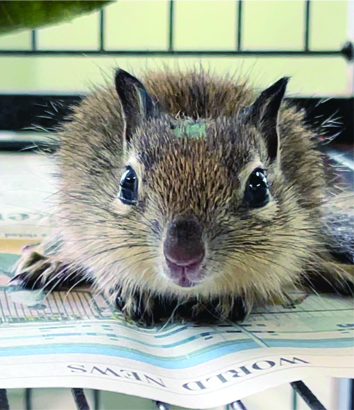
California Ground squirrel orphan in care
Photo by Jennifer Brent

Every spring, California Wildlife Center takes in orphaned baby squirrels, some just weeks old. Many people associate baby squirrels with those who live in trees. We also receive young California Ground Squirrels. We have admitted 39 so far this year. You can recognize them by the gray and brown fur on their backs with specks of lighter gray mixed in. These squirrels can be found living in farmlands, fields, chaparral, grasslands, cities and suburbs from central Washington state south to Baja, California. When these young squirrels arrive at CWC, they start off in our Orphan Care Unit.

The infant squirrels are initially fed a specialized formula using a syringe. When they graduate to eating solid food, they receive a variety of vegetables, fruits and nuts similar to their diet in the wild. At CWC their main diet includes lettuce, zucchini and monkey biscuits (a crunchy bite chock-full of protein and vitamins). They also receive sunflower seeds, nuts, occasionally pieces of corn on the cob and fruit.

Some of the predators of the California Ground Squirrel include raptors, raccoons, foxes, coyotes, bobcats, gopher snakes and rattlesnakes. While the adult ground squirrels are resistant to rattlesnake venom, the young ones are not. Snakes will sometimes enter burrows at night while they are sleeping. The female squirrels are very protective of their young. The clever squirrels have figured out that if they chew on rattlesnake skin and lick their bodies and the bodies of their young, they will smell like snakes and make it difficult for the snakes to find them.

As their name implies, California Ground Squirrels live in burrows they dig in the ground that can range from 5 feet to 35 feet long. Sometimes these squirrels live alone, while other burrows house multiple squirrels and their babies. Our technicians provide the squirrels with make-shift burrows to sleep in using a tissue box or plastic igloo. Each group at CWC is made up of 4-6 squirrels. These groups remain together until they are old enough to return to the wild.

Share this entry
  • Share on Facebook
  • Share on X
  • Share on WhatsApp
  • Share on LinkedIn
  • Share on Reddit
  • Share by Mail
https://cawildlife.org/wp-content/uploads/2026/05/CWClogo.png 0 0 protectanimals https://cawildlife.org/wp-content/uploads/2026/05/CWClogo.png protectanimals2021-06-09 22:45:592021-06-09 22:45:59A Second Chance for Orphaned Squirrels
1 reply
  1. Freda Shen
    Freda Shen says:
    June 10, 2021 at 9:11 pm

    That’s an amazing fact about the mothers’s scenting their young and themselves with chewed rattlesnake skin. May i also say, another ‘predator’ of ground squirrels is cars? I travel the farm roads in Ventura and much too often see squirrels that have been run over by cars. The only consolation is this road kill provides food for vultures and other scavengers.

Comments are closed.

LATEST POSTS

  • The Education Corner: RenestingMay 13, 2026 - 11:40 am
  • Rescuing Stranded Marine Mammals during an Outbreak of Avian InfluenzaMay 13, 2026 - 11:38 am
  • Wild BeginningsMay 13, 2026 - 11:33 am
  • Through Darkness back to FlightMay 13, 2026 - 11:30 am

Contact Us

P.O. Box 2022
Malibu, CA 90265
E-mail: admin@cawildlife.org

Contact Us

P.O. Box 2022
Malibu, CA 90265
Hotline Phone: +1 310 458-WILD (9453)
E-mail: admin@cawildlife.org

DONATE TO CWC
CWC Tax ID#95-4580790

SIGN UP FOR OUR NEWSLETTER

CLICK HERE TO SIGN UP

Quick Links

Privacy Policy
Financials & Legal Info

Join us on Facebook!

Categories

BLOG ARCHIVES

© California Wildlife Center | All Rights Reserved | Webmaster SV3 Designs
  • Link to Facebook
  • Link to X
  • Link to Youtube
  • Link to Instagram
  • Link to Mail
Link to: Feathers, Flippers and Fur Goes Virtual Link to: Feathers, Flippers and Fur Goes Virtual Feathers, Flippers and Fur Goes Virtual Link to: A Raven’s Journey to Recovery Link to: A Raven’s Journey to Recovery A Raven’s Journey to Recovery
Scroll to top Scroll to top Scroll to top

JOIN TODAY


Yes! Keep me updated about the animals at CWC

Enter your email address for the chance to win a private tour of CWC


    Your information will never be shared with a third party