Bumper Crop for Baby Care Unit

By Hospital Manager Denys Hemen
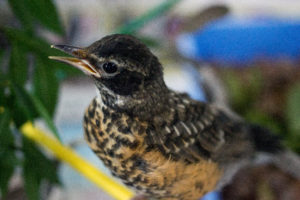
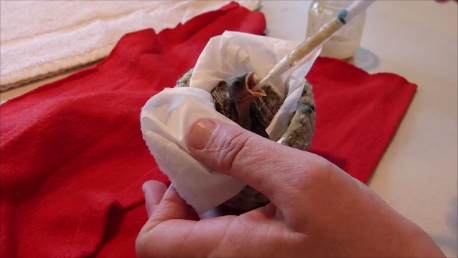
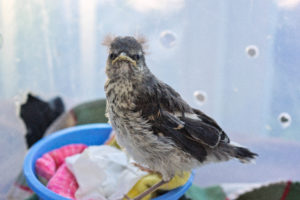
Orphaned birds like this young American robin are placed in CWC's Baby Care Unit while they receive the treatment and diet necessary for them to grow. Photo by Kim Barker

Orphaned birds like this young American robin are placed in CWC’s Baby Care Unit while they receive the treatment and diet necessary for them to grow. Photo by Kim Barker

It was another great year inside of our baby bird nursery at California Wildlife Center.  We are the only wildlife rehabilitation center in Los Angeles County that takes in baby songbirds, baby crows, and baby ravens. Due to this fact, we have to dedicate lots of space to their care.  We added 128 square feet of indoor space to our existing 14 enclosures that are dedicated to baby songbirds, crows, and ravens.  It took our team a lot of blood, sweat, and tears to accomplish but it was well worth it.

We were able to release hundreds of birds back to the wild. There was a wide array of birds that traveled through our doors this summer. There are the most common species we care for and raised: northern mockingbirds, black phoebes, house wrens, western scrub jays, western kingbirds, cliff swallows, mourning doves, dark-eyed juncos, American robins, house finches, bushtits, acorn woodpeckers, California towhees, American crows, lesser goldfinches, and common ravens.

At the height of the season, we were ordering 60,000 mealworms, 1000 waxworms, and 2000 crickets per week to feed the songbirds and 50 pounds of dog food, protein, eggs, and produce per week for the crows and ravens!  Our dedicated team of staff, interns, and volunteers worked 13-hour days to feed all of the open and hungry mouths.

Baby bird season has just ended at CWC.  We put our last group of northern mockingbird babies out in the aviaries last week.  It was a tough summer! But before we even take a breath, 48 baby squirrels moved into the nursery!
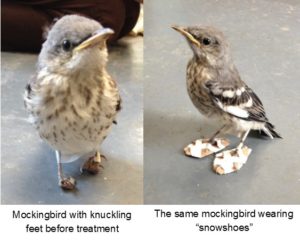
Snowshoes in the Summer

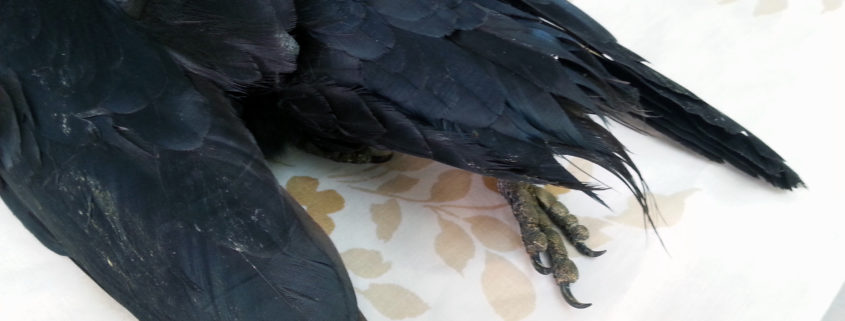
California Wildlife Center recently rescued a Northern Mockingbird whose feet were knuckling, meaning she was unable to open her feet to stand or perch.  This was causingbefore and after snowshoes the bird to have to stand on the tops of her toes which were curled under and causing her additional injury.
CWC veterinary staff created “snowshoes” for the mockingbird to retrain her feet to open and allow the injuries to her toes to heal.  The treatment was successful and the bird is now snowshoe-free and on the road to full recovery!

New Aviary Filled with Unkindnesses and Murders

Ravens by Heather Patrice Brown

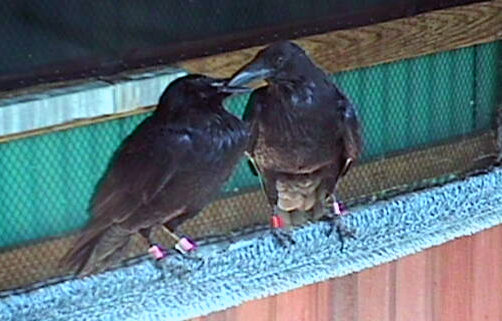
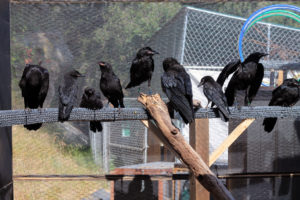
Ravens and crows enjoy the new enclosure. Photo by Heather Patrice Brown

By Development Coordinator, Heather Patrice Brown

“Squawk!” “Caw-caw!” The new exterior aviary, sponsored by the Wendy McCaw Foundation, is anything but a quiet, peaceful place.  This 8’ x 16’ enclosure currently houses both a murder of American crows and an unkindness of common ravens that arrived as orphaned babies.  The aviary provides multiple perches in both sun and shade. This aviary provides a little room for the rowdy birds to stretch their wings and perch in the sun or the shade while being hand fed. Once they eat on their own, they graduate to the large 25′ x 25′ x 12′ aviary!

Ravens and crows belong to a family of birds called Corvidae.  Members of the family, which also include jays and magpies, are referred to as a group as Corvids, and are often considered some of the smartest birds in the world.  California Wildlife Center staff and volunteers often give the ravens and crows toys or hide their food in puzzles as enrichment and to teach them valuable skills they will need in the wild.

What Are You Looking At?

The many different faces of wildlife rehabilitation

Northern Mockingbird by Denys Hemen

A Northern mockingbird gives a glare to CWC rehabilitators. Photo by Denys Hemen

By Hospital Manager, Denys Hemen

Spring came with a bang this year as our nursery exploded with baby birds. California Wildlife Center is the only wildlife rehabilitation center in Los Angeles County that takes in native baby songbirds. We get in hundreds of individuals of many different species….all of which look grumpy. No matter what we do we cannot erase the look of disgust from these birds faces. We hand feed mealworms, waxworms, and crickets for 12 hours a day. Everyone gets a special vitamin supplement daily to help them grow stronger. We add natural leafy branches to the insides of their enclosures. We weigh them all every other day to make sure each bird is properly gaining weight. Still all we get are grumpy faces! It doesn’t bother us though. We just shrug it off because in the end we are all here for one thing…. to see the angry looking little birds grow into beautiful happy juveniles and take off into the sky to be free again.

California Towhee by Denys Hemen

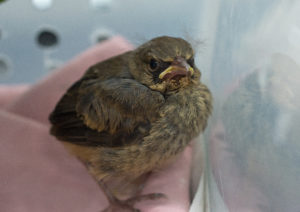
A California towhee (above) awaits its next feeding. Photo by Denys Hemen


Feeding Baby Birds

Click on the photo to see how baby birds at California Wildlife Center are fed.

Young songbirds need to be fed frequently with a syringe filled with a special baby bird formula.

Young songbirds need to be fed frequently with a syringe filled with a special baby bird formula.

Star-Crossed Ravens

Winter is Coming!

Annual Migration Brings Rare Species