
• Link to Facebook
  • Link to X
  • Link to Youtube
  • Link to Instagram
  • Link to Mail
MEDICAL EMERGENCY? CALL: +1 310 458-WILD(9453)
DONATE
California Wildlife Center
  • Home
  • About Us
    • What We Do
    • Our Team
    • Education
  • Animal Resources
    • Medical Emergency
    • Co-Existing with Wildlife
    • FAQ
    • Animal Profiles
    • Gallery
  • Support Us
    • Ways to Support Us
      • Donate & Support Wildlife
      • Conservation Circle
      • Sponsor an Animal
      • Our Wish List
      • Other Ways to Give
  • Get Involved
    • Employment
    • Volunteer
      • Become a Volunteer
      • Internships
      • Externships
  • Events
  • News & Blog
    • In the News
    • Newsletters
    • Patient of the Week
    • Edison
    • From the Community
    • Videos
    • Gallery
    • Media Requests
  • Contact
  • Store
  • Click to open the search input field Click to open the search input field Search
  • Menu Menu

The Secretive Pacific Harbor Seal

By Heather Henderson, Marine Program Manager

Harbor seals are found in nearly every ocean across the globe. There are even two local sites in Malibu that support year-round populations, and yet our Marine Mammal Rescue Team receives only one or two reports per year about a harbor seal in distress. How can this be? Pacific harbor seals (Phoca vitulina) are very shy and go to great lengths to keep their distance from humans. They are phocids, or true seals. Phocids can locomote on land, however their grace and comfort are exhibited in the water. They slyly float and swim through kelp beds and quietly bob at the surface. When hauling out of the ocean to warm up and rest, they choose small rocks surrounded by water instead of crowded sandy beaches.

There is a good chance that when you are in the ocean or near the water’s edge, a harbor seal is keeping a close eye on you without you noticing them. While diving or kayaking a curious harbor seal may do a swim by, but unlike the gregarious California Sea Lion, they are unlikely to engage. Harbor seals are so shy that when a mother leaves her pup on the beach to go out and forage, she will delay returning if people are nearby. Concerned beachgoers, assuming that a young seal was abandoned, have caused pups to become orphaned by remaining too close to and preventing the mom from returning.

If you encounter a harbor seal hauled out on the beach, do not touch them. Even if they are young and/or injured they are easily startled back into the ocean, which prevents aid from being given. If you see a seal in need of help and the animal acknowledges your presence, then you (or your dogs) are too close! Immediately step back 50-100 feet, take a zoomed in photo and call our local marine mammal rescue team for advice.

Pacific harbor seals are a wonderful part of the biodiversity of our coastline. Please enjoy them from a distance!
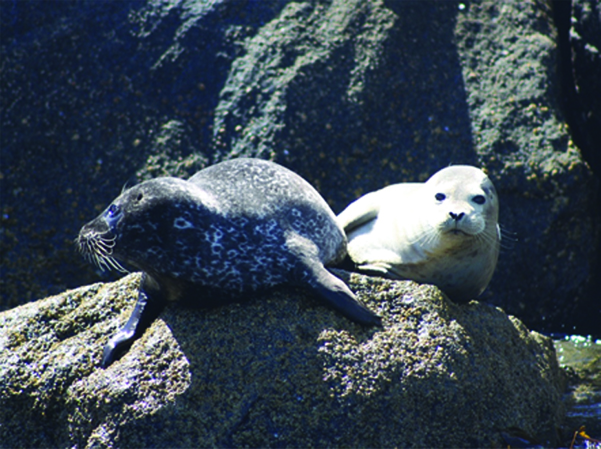
Harbor seals hauled out on rock
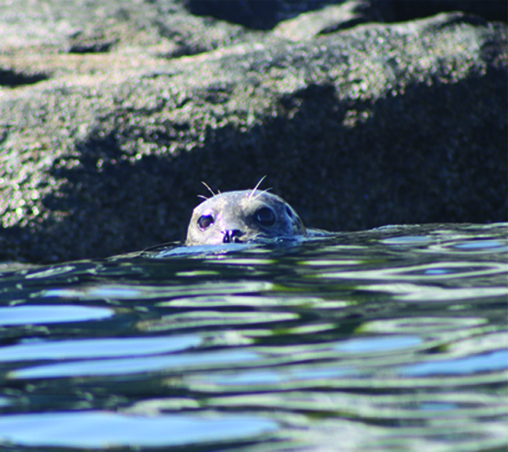
Seal bobbing at surface of water
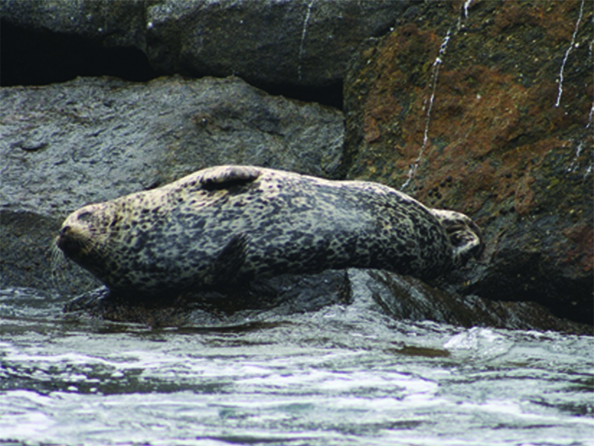
Seal on small rock, surrounded by water

Harbor seal among kelp

LATEST POSTS

  • The Education Corner: RenestingMay 13, 2026 - 11:40 am
  • Rescuing Stranded Marine Mammals during an Outbreak of Avian InfluenzaMay 13, 2026 - 11:38 am
  • Wild BeginningsMay 13, 2026 - 11:33 am
  • Through Darkness back to FlightMay 13, 2026 - 11:30 am

Contact Us

P.O. Box 2022
Malibu, CA 90265
E-mail: admin@cawildlife.org

Contact Us

P.O. Box 2022
Malibu, CA 90265
Hotline Phone: +1 310 458-WILD (9453)
E-mail: admin@cawildlife.org

DONATE TO CWC
CWC Tax ID#95-4580790

SIGN UP FOR OUR NEWSLETTER

CLICK HERE TO SIGN UP

Quick Links

Privacy Policy
Financials & Legal Info

Join us on Facebook!

Categories

BLOG ARCHIVES

© California Wildlife Center | All Rights Reserved | Webmaster SV3 Designs
  • Link to Facebook
  • Link to X
  • Link to Youtube
  • Link to Instagram
  • Link to Mail
Link to: A Mouse Tale Link to: A Mouse Tale A Mouse Tale Link to: Let’s Take This Show on the Road! Link to: Let’s Take This Show on the Road! Let’s Take This Show on the Road!
Scroll to top Scroll to top Scroll to top

JOIN TODAY


Yes! Keep me updated about the animals at CWC

Enter your email address for the chance to win a private tour of CWC


    Your information will never be shared with a third party