NHM Avian and Mammal Collections
California Wildlife Center staff and volunteers recently had the unique opportunity to go on a behind-the-scenes tour of the avian and mammal collections department of the Los Angeles Natural History Museum (NHM).

California Wildlife Center staff and volunteers recently had the unique opportunity to go on a behind-the-scenes tour of the avian and mammal collections department of the Los Angeles Natural History Museum (NHM).
You have surely heard, if not seen, a Northern Mockingbird in your area. They can be heard serenading at any time of the day and night and can mimic hundreds of noises. This small gray bird with white patches on their wings and long tail feathers, can be found in grasslands, wooded areas, or in your backyard.
Volunteers and interns are an integral part of the successful rescue, rehabilitation, and release of the over 4,000 patients that arrive at California Wildlife Center each year. Volunteers are present at CWC seven days a week, 365 days per year to assist the wildlife technicians with day-to-day animal care tasks including cleaning and maintenance of enclosures, and giving the patients their diets, medications, and enrichment.
At 9am on March 16th, 2024, we received a report that a deceased whale had come ashore at Little Dume. Upon arrival, it was determined that this 30-foot-long sub-adult male, weighing approximately 25,000 pounds (the same as seven cars), was still alive, yet in grave condition and floating at the surf line.
Encountering a young animal in the wild can be an exhilarating experience. Although it is natural to have the initial instinct to intervene in an attempt to protect the animal, stepping in without proper knowledge can do more harm than good.
Read this pictorial story about the rescue and release of a malnourished California Sea Lion pup found on a busy beach
By: Cambria Wells, Education and Outreach Manager
At CWC we treasure our opportunity to undo some of the damage inflicted on our patients by human impact. The experience of working directly with wildlife and acting as a positive influence on the course of their future is a privilege limited to a few, and as our core mission that carries us forward. But there’s an open secret in our field; we wish our patients had never been forced to need our help to begin with. In our interactions with our community, we focus every day on educating others about how to keep wildlife safe. This year, we’re expanding our capacity to share what we know and love with the ten million people who reside in the areas we serve. The new CWC education program is an all-ages outreach effort centered on what wildlife rehabilitation is, how it is practiced, and how to live alongside wildlife as a good neighbor. Our van, funded through generous donations from (now retired) Los Angeles County Supervisor Sheila Kuehl, will travel Southern California to offer free educational outreach opportunities. We come to you excited to share exhibits, crafts, activities and presentations based around human/wildlife conflict principles and California’s Next Generation Science Standards. Topics include:
… And more! Activities range from simple talks to multi-station workshops, and start at the pre-k level. We believe everyone has something to learn from wildlife; we learn something new every day!
We are now scheduling events for our 2024 pilot year and have special flexibility and capacity as the program grows. Schools, businesses, and events are encouraged to fill out a program request form at cawildlife.org/education
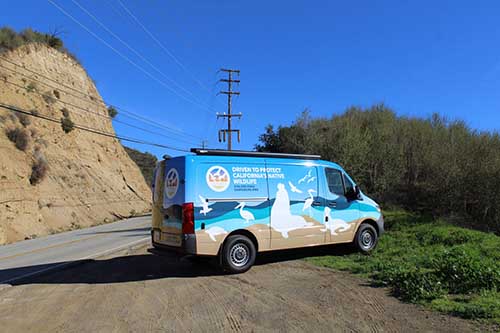
New Education Vanimal
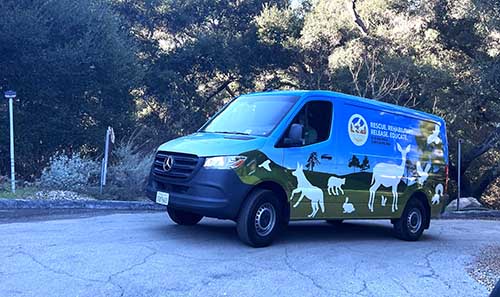
Cambria in Education vehicle
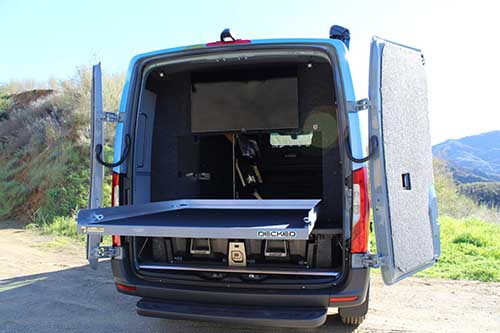
Back of vehicle
By: Dr. Guthrum Purdin, Veterinarian
The animals who are brought to wildlife rehabilitation centers represent a myriad of species, each having unique biological and behavioral needs. Successfully treating an animal who may have been dying when they arrived requires a deep understanding of what that particular individual needs, and how their condition is affected by species-specific variables. Very little medical research has been done on treating wildlife, so rehabilitators need to make themselves keen observers and experts on the animals they handle. Often, new therapies and treatment strategies are created by individuals working in the terra incognita of wild animal care.
Many years ago, when my wife and I were finishing our undergraduate classes prior to attending veterinary school, we were co-directors of animal care here at the California Wildlife Center, just a few years after it first opened. I remember one case from this period that needed us to be especially creative in order to help a female Mallard who arrived in dire condition.
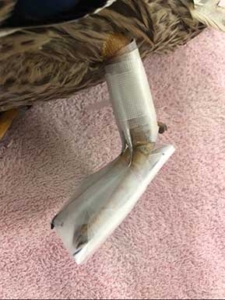
Duck boot – photo credit by Dr. Rebecca Duerr
The Mallard had been seen by a regular dog & cat veterinary office for an injured leg before transfer to CWC. That vet had put a splint on the leg that would have been fine for a dog, but the duck was having a lot of trouble. On arrival, she was tumbling over & over as she tried to stand, failed, fell over, and panicked again and again. We removed the leg wrap and found a bone called the tarsometatarsus (TMT) was broken very close to the foot. This bone is below the hock (the hock is the joint equivalent to a human ankle but looks like a backward facing knee when ducks are waddling around). It’s normal for mammals to include the joints above and below a bone fracture into a splint to stabilize the break. However, with most birds, such wraps make normal walking impossible and wild animals quickly start to panic. Plus, birds will heal fractures quicker, with less risk to surrounding joints, if they can use the leg normally. For a broken TMT, we usually apply stiff padded splints to one or two sides of the bone. This can be enough for a hawk or a songbird. For this duck, it was not enough— she was folding the foot under the leg, standing with her foot upside down. We had to put our thinking caps on for this one! The solution we came up with was to make a “shoe” of stiff material (like the firm closed-cell foam used in certain food packaging) cut in the shape of the foot, padded, and taped on, plus we cut metal paperclips, bending them to match the angle of the TMT where it meets the foot, wrapped them in padding, and taped the whole rig in place. Voila! The first “duck boot” was made. The female Mallard could now put her weight comfortably on the leg, walking easily and confidently—without panicking.
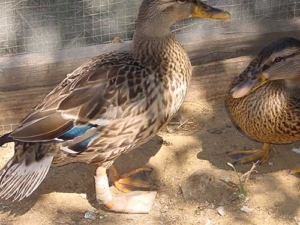
Duck boot splint – photo credit by Dr. Guthrum Purdin
But wait! I didn’t mention she had ducklings with her. A broken leg like hers usually means the bird is “dry docked” for a while, kept out of water so the splint and wrap can stay dry. But with her babies in tow, she would need to be able to get into and out of a shallow pool of water. The answer was using a kind of plastic tape that maintained its stickiness in the water, giving her a waterproof boot. With a good diet, medication for pain and inflammation, plus a quiet, peaceful enclosure to heal in, this Mallard was able to resolve the fracture, take care of her ducklings, and they were all released together back into the wild.
Since then, we’ve used this splint dozens of times, taught its use at rehabilitation conferences and veterinary schools, and it has been included in a couple textbooks. This is not a unique story. Wildlife rehabilitators, from highly trained veterinarians to deeply committed volunteers with no formal education, have come up with many of the crucial treatment modalities used around the world for countless injured, sick, and orphaned wild animals who, without their caregiver’s dedication and determination, would not have survived. These techniques are shared and refined amidst the rehabilitation community and will benefit distressed wild animals for generations to come. Every time I go to a conference, open a journal, or sit down to dinner with a colleague, I never know what new ideas and innovations will be revealed!
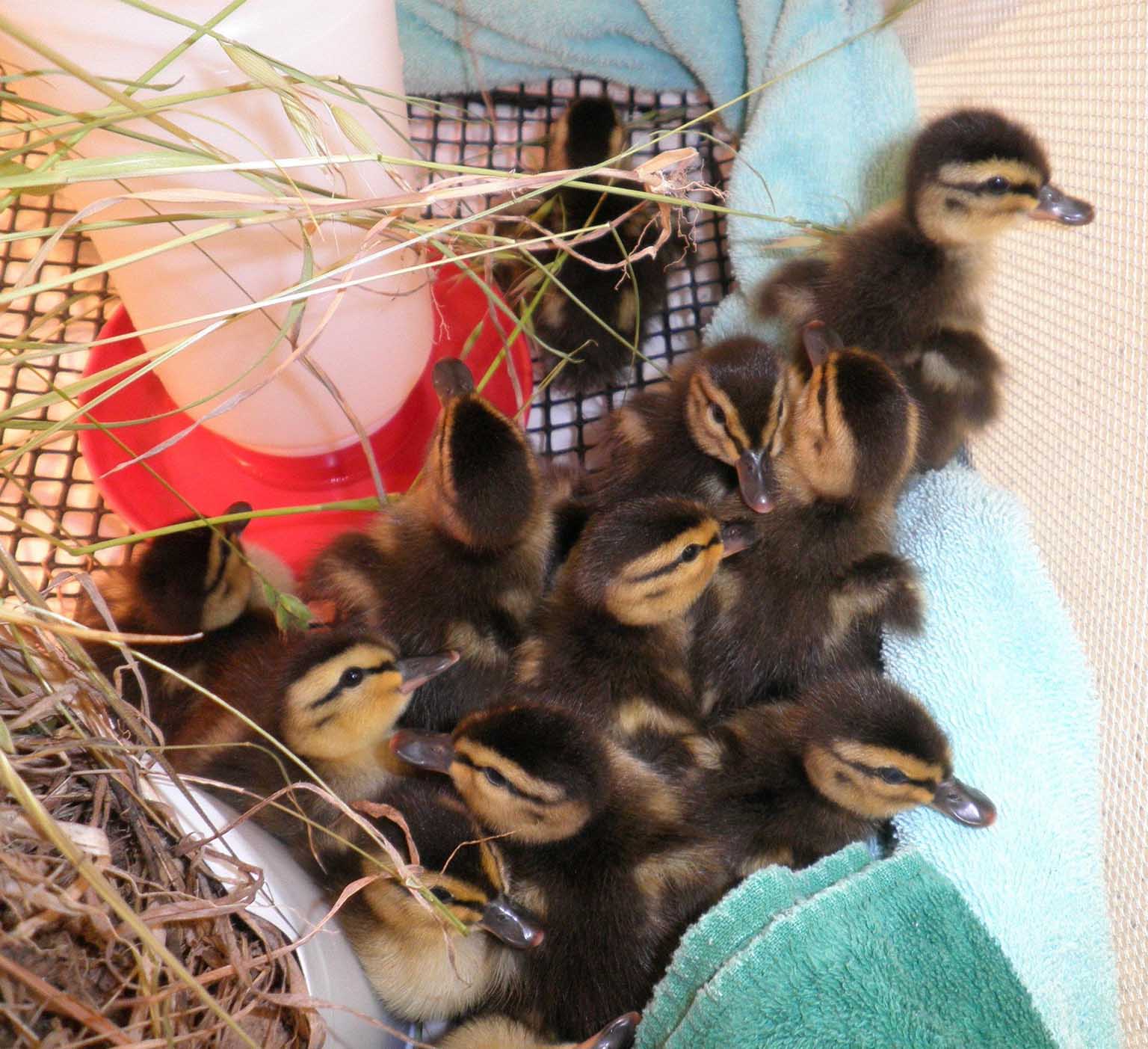
Ducklings – photo credit by Dr. Guthrum Purdin